Monday, March 29, 2010

Institutional Death and Resurrection

As we enter another Holy Week, I find myself pondering issues of death and resurrection--not individual death and resurrection, but congregational and denominational death and resurrection. It seems to me that there are many signs that congregations and denominations that flourished in the twentieth century are finding it difficult to continue to survive, much less thrive, in the post-Christendom, post-modern, and post-Great Recession times of the early part of this century. Author and blogger George Bullard has some thoughts on exactly this:

The Columbia Partnership: The Coming Death of National Denominations

Among many other observations, he notes that:

...many national denominations believe that restructuring themselves or re-tasking national agencies is the same thing as renewing the spiritual, strategic direction of the national denomination. No consistent evidence exists that restructuring national denominations alone leads to the renewal of these denominations. Restructuring actually is a step in preparing for another restructuring within five to ten years. Restructuring fits in the same category as rearranging the chairs on the Titanic.

Being raised in Silicon Valley and graduating from high school in the mid-1980s, I have some personal experience with the difference between large institutions who fail to innovate quickly and small, nimble companies who can adjust to changing demands and conditions quickly. For more than a decade, I've said that many aspects of mainline denominations resemble a battleship--slow, difficult to steer, but incredibly tough and resilient. There was a reason for the "battleship church"--it was seen as a source of stability, power, and consistency in a world that was anything but stable. Words like "sanctuary" and hymns like "A Mighty Fortress is our God" spoke of the church as an unchanging rock against the tidal waves of change sweeping the culture of the late twentieth century. That sense of the church a a guardian remains one of the main touchstones of many people's faith.

Yet we are now in the era where institutions must be more like powerboats or patrol boats than battleships. The Navy doesn't make or use battleships anymore. In the same way, we in the church must find ways of rediscovering that "nimble church" that is alive, vibrant, and perhaps a bit more vulnerable than the previous "edifice church." That is easier said than done, of course. Planting new churches, re-planting declining or plateaued churches, and not simply rearranging things but revitalizing the things we do is an incredible challenge. Yet the message of Holy Week and Easter is that sometimes things need to die before then can be reborn. The message of the cross is that to get to resurrection we must place our sins at the foot of the cross and die to an old life. How does that function on a congregational level? What things do we need to crucify in our congregations (without getting crucified ourselves, of course!) in order to make room for new life? Something to think about.

Monday, March 22, 2010

Technology and Sanctuary

Take a look at this video. It talks about all of the technological revolutions that have occurred in the last several decades and what is forecast for the future:


I'm 42 years old this year and I am mindful that my lifetime has seen revolution after revolution in how we get, process, and make use of information as well as how the vast majority of the rest of the world does this. And, as the video points out, the rate of change is accelerating logarithmically as each day passes.

Two things occur to me as I think about both the past and the future of the vocation God has called me to as a pastor and priest of the church. First, that this information revolution will affect some things that we do very much--people will have access to a virtually unlimited amount of information about the Bible and theological reflection and will be able to, essentially, be their own expert (for the moment) on anything that they choose to study. Second, however, I believe that there will be an increasing need for a sanctuary from the information tsunami--a place to step back, step out, take a breath, and ask some very low-tech questions about meaning and purpose.

The church may well be uniquely positioned to offer just such a sanctuary, a harbor, in which to ask those questions and seek answers that are not accessible at the touch of a key or the click of a mouse. Now all we have to do is penetrate the noise....

Saturday, March 13, 2010

What is God up to and how can I get in on it?

I've spent more than a little while in thought and prayer about what God might be up to in twenty-first century America and how the congregation I currently lead and I can get in on that action. It is increasingly clear to me that the biggest challenge for the institutional church today is learning how to build on and celebrate what has gone before without succumbing to either grief that much of the last vestiges of Christendom are passing away or the temptation to become a preservation society, frantically scrambling to protect what we already have against the onslaught of post-modernity.

Archbishop Rowan Williams has talked about the concept of the "mixed economy" church where the old and the new not only coexist, but actually support one another. One phrase in (not from him) in particular caught my eye:

Very diverse expressions of church would exist alongside each other in mutual fellowship. Old and new would be a blessing to one another.

Old and new would be a blessing to one another.
So counter-cultural a notion, that both the old and the new would be a blessing to each other rather than a burden. As we move into what many have talked about as a new reformation, a new way of being and doing church, perhaps such a concept would help with this transition. Still thinking....

Monday, March 01, 2010

Spiritual Feeding and Working for It

I'm continuing to ruminate on the idea of spiritual feeding and spiritual growth. So many times I think I'm laying out a spiritual banquet when I preach or teach and yet I will hear "I'm not being fed." Sometimes I think it is a lack of imagination on our part as clergy--we're so used to serving up the usual fare that it never occurs to us to add to, or even rearrange, the spiritual menu. I'm not suggesting getting rid of communion or (God forbid!) the sermon, but I am suggesting that it might make sense to push the edges of the spiritual envelope a bit and see who (literally) "bites."

I don't think it is just the clergy, however. I'm also thinking that in an age of fast food, microwavable dinners, and pre-made peanut butter and jelly sandwiches, we all might be a little reluctant to work for our spiritual food. Face it, most of us are as lazy spiritually as we are often lazy physically. We want God to show up, put on a good show, give us our instructions for the week, and then disappear in a flash of light, leaving us to live and love for another week. What I suspect we least want to do is to do that daily work of prayer, scripture study, and personal worship that is central to the Christian life. Even as a pastor and priest, there are times when I'd much rather take a nap or catch an hour or so of TV (or do an hour of surfing the Internet) than I would like to engage in personal devotions.

Yet just as there is not substitute for eating healthy and getting exercise, there is no substitute for taking in healthy spiritual food and engaging in (at times rigorous) spiritual exercise. Deep down, we all know this, and yet as much as it is tempting for me as a teacher to try to "re-package" things to appeal to the fast food culture it is also tempting for me as a disciple to want that for myself. May this Lent be a time where we eschew pre-packaged and processed spiritual food for the milk and meat of scripture, the bread and wine of the Eucharist, and the sweet honey of God's spirit flowing through us.

UPDATE: One of my favorite theologians, Diana Butler Bass, collaborated on this short video, which says what I just said better than I just said it:

Tuesday, February 23, 2010

The Umbilical Cord of Christianity

For many years, I've struggled with the developing tradition of inviting people to receive communion prior to being baptized. It is specifically prohibited in the canons (rules) of the Episcopal Church, and yet many churches do so. It is often referred to as Communion Without Baptism or CWOB. Perhaps the most visible example of someone coming to faith in Christ through this practice is Sara Miles who wrote Take This Bread: A Radical Conversion. She is just out with another book Jesus Freak: Feeding, Healing, Raising the Dead. I just read an interview with her and I'm struck again by how she really battles against the church's attempt to control or constrain God. I'm struck by her faith and by the fact that she accurately portrays some of the chief obsticles to that faith that lie within the church itself.

As I thought about that, I thought about how we think about baptism and communion. The idea is that we join in this meal at God's table after we have been born (actually, re-born) into God's family through baptism. In other words, we're born and then we are fed. That makes a certain kind of sense. However, if one takes this metaphor a bit further, how are "pre-Christians" or yet-to-be-(re-)born Christians fed before they are born into God's family? In other words, what provides the "womb" in which a person's first cells of faith can grow and the "umbilical cord" that provides the "nutrition" or spiritual food without which the unborn-again person will spiritually starve? It seems like, for Sara, that umbilical cord was, at least in part, communion itself.

I don't know exactly what to do with this metaphor, but I do think it is worth asking whether the church is a place that provides a safe place for spiritual growth and the "food" necessary for such growth or whether the church can only provide solid food, as it were, to those already in God's family. If it can only feed those who are already Christians, then we become essentially spiritually barren--unable to receive the gift of the beginnings of a new life that is growing within someone and nurturing it to in climax in someone's rebirth. Thomas Brackett, the Program Officer for Church Planting and Redevelopment of the Episcopal Church, talks about "midwifing" what God is already doing--nurturing it and helping it along. How might we best do that, I wonder, and what would it take to move from hospital or restaurant to birthing center?

Friday, February 19, 2010

40 Days and Four Months

Yesterday marked four months since my first Sunday at St. Edward's, San Jose. Like many milestones, it seems like I have both been here forever and (more often) like I have just arrived. I've frequently remarked to folks that beginning my time as Priest-in-Charge in October has been like leaping on an already moving train--things are already in motion, and it is often more of a case of having only enough time for slight adjustments in direction rather than the time to make wholesale revisions to the way we do things. Summer is often the "down time" in which major changes to program or direction are best made. However, having not yet had a summer here, I'm figuring on continuing on in this "transition phase" and seeing where God takes us.

Lent is a particular reminder, however, that in the midst of the busyness of life, there is a need to periodically step back, take a deep breath, and spend a bit of time in introspection and discernment. My own Lenten commitment is do to just that--to take regular time for prayer, study, and personal worship during Lent and see where that leads me (and St. Edward's as well). In the benedictine model I'm following both personally and professionally, Lent falls during the time of concentration on obedience, which chiefly involves listening to God, to the church, and to others. Like Jesus in the wilderness, I'm often tempted by the urgent things on the "to do" list to ignore the important work that needs to be done on a more foundational level, but Lent is a very good time to recognize that temptation and flee from it. By the grace of God....

Saturday, January 23, 2010

Good News?

It has been two weeks since I last posted here, though my blog entries at the St. Edward's blog have been many and varied over that period of time. It has also been nearly two weeks since the massive earthquake in Haiti, where much of the world's, the church's, and my attention has been over these last several days. Refreshingly, we in the Episcopal Church have been diverted from our seeming obsession with sexuality to a much more productive obsession--figuring our what we can do for the people of Haiti and discovering, sometimes for the first time, the things that the Episcopal Church has been up to in Haiti and continues to be up to.

I must say that it is a huge challenge to preach to a congregation like St. Edward's while people are literally dying every second in the streets and crumbled buildings of Haiti. Tomorrow morning I'll get in my hybrid car, drive down a well-paved and well-traveled road for 40 minutes, and arrive at a church in a relatively well off area, in fact just blocks from a very exclusive part of Los Gatos. I will lead worship in a beautiful church building with nice grounds around it, and we'll have coffee and cookies outside the front door (or inside, if it is too cold). At the same time, my fellow Episcopalians in Haiti will have already awakened to yet another day of hardship, wondering where their next meal will come from (or even if they'll have a next meal anytime soon) and simply attempting to survive for the day until they (hopefully) fall into an exhausted sleep. Frankly, anything I could possibly say from the pulpit of a comparatively well-off church seems woefully inadequate!

And yet, as I ponder again the lessons appointed for tomorrow, I also run across the collect appointed for the day:
Give us grace, O Lord, to answer readily the call of our Savior Jesus Christ and proclaim to all people the Good News of his salvation, that we and the whole world may perceive the glory of his marvelous works; who lives and reigns with you and the Holy Spirit, one God, for ever and ever. Amen.
I'm pretty sure I know what "Good News" and "salvation" look like in the streets of Haiti--people being pulled from rubble, finding friends and family alive, and finding a relatively safe place to sleep, a bit of food and water, and possibly some relief from the mid-80 degree heat and humidity. Nothing more complicated than that: food, shelter, life. What does "the Good News of [Jesus'] salvation" mean to me and to the people entrusted to my spiritual care? What should it mean?

The answer, at least as far as I can tell, is summed up in one word: transformation. For those who literally have nothing, very simple things can be transformational. For those of us who have more, transformation looks a bit more complicated. If you want to know what I say tomorrow about transformation, head on over to the St. Edward's blog on Monday or Tuesday. I should have something more to say then.

Saturday, January 09, 2010

Sealed and Marked

"You are sealed by the Holy Spirit in Baptism and marked as Christ's own forever."

These words are those that I and other Episcopal priests use as we mark a cross with holy oil on the forehead of a person just baptized. It is a powerful statement! The newly baptized person has essentially been branded (or tattooed?) with the sign of the cross, a sign that while physically invisible is also permanent. We believe that we are "Christ's own forever" by virtue of that baptism and sealing.

I'm thinking a lot about baptism because I am preaching tomorrow on the baptism of Jesus (the feast day of the "Baptism of Our Lord", to be specific) and thinking about what it means to be baptized. Much as no one remembers the day they were born (which is probably fortunate...), those of us who were baptized as infants don't remember what might be regarded as our "second birth." So our identity does not proceed from a remembered event but from an emotional affirmation of an affirmed theological and spiritual reality. What, then, does it mean to be baptized and, more personally, what does it mean for me that I am baptized?

I think it means at least three things, both theologically and personally, for me. First, it means that I am inexorably linked with God--I am "marked as Christ's own forever." The covenant of God is not one that can be voided, it is eternal. So even in the midst of the trails and tribulations of this mortal life, I can know that I am linked with God as a beloved child of God. That identity is a precious thing it a world that seeks to define us in a host of lessor ways. We are classified by our public roles as constituents, consumers, and taxpayers. We are evaluated by "what we do" in our jobs as doctors, lawyers, priests, salespeople, cashiers, managers, students, etc... We are evaluated by our family roles as parents of our children, children of our parents, and sometimes even parents of our parents in their old age. We can even by typecast by surface things such as race, body type, clothing choices, or even hairstyle. None of these ways of categorizing or judging ourselves and others reveals our most important, most lasting, but most hidden identity as baptized children of God.

Second, it means that I am linked to a worldwide community of faith that is currently locally manifested in the various people in the pews of my local congregation at St. Edward's. Perhaps the most powerful call to ordination for me was the call to form and facilitate such local faith communities, parts of the Body of Christ. I have been both supported and challenged in various ways by them--from youth groups to college groups to the church family at my home church (Christ Church, Los Altos) to classmates at the seminary I attended (VTS) to the various parishes I have served--all have served to teach me what it is to be a disciple of Jesus Christ and support me in that effort. In a world of both increasing personal isolation and yet more and more ways of connecting to one another across thousands of miles via email, Twitter, Facebook, etc... such personal relationships are more and more tenuous and yet more and more critical.

Third, it means to that I am empowered and enabled to live as a disciple of Jesus Christ by the power of the Holy Spirit living in and through me. This is perhaps the most difficult of things to articulate. It is comparatively easy to claim my identity as a child of God and a part of the church, but how does one put into words something so ethereal and yet so central to my own life and ministry. I suppose the answer to that is that I cannot put it into words but only put it into actions. How I function as a Christian, how I care for myself and others, and how I exercise my gifts and talents in service to God in the world perhaps embody more than anything else the often unseen work of the Spirit within me. Hopefully my own human failings don't get in the way of the Spirit's work too often!

So, that is a bit of what I'm likely to reflect upon in my sermon tomorrow--being a child of God, a member of the Christian community called the church, and an agent of the Spirit. Come on by and join us!

Monday, December 14, 2009

Great Music, Great Message

As we begin to wind down the season of Advent, I ran across the following video for Canticle of the Turning, one of my favorite worship songs. It is one of my favorites both because I love Celtic music and because of the words. Is the world about to turn do you think?

Tuesday, December 08, 2009

Two-track Blogging and A Suffragan Bishop

I began this blog more than two and a half years ago in March 2007 and used it in earnest during my Sabbatical in the summer or 2007. Since then, like other things, it has been busier at some times than other times. Recently, however, any readers may have noticed a drop-off of the frequency of postings. The reason for this is that I began a parish blog for St. Edward's church, where I now serve as Priest-in-Charge. I try to post there at least once a week, usually on Sunday or Monday, with a perspective on the sermon I've just preached or other items of interest. Trying to keep up the frequency of posting on that blog has meant a lack of posts on this one. However, time is not the only factor here. When this was my only blog, I freely mixed personal and parish news and interest items. Now that I have separate personal and parish blogs, I often find it hard to think about what to blog about personally that does not have anything directly to do with my parish.

That being said, there is plenty swirling around Episcopal/Anglican-land these days. With the election of The Rev. Canon Mary Glasspool as one of two Suffragan Bishops in Los Angeles. As I have several partnered gay friends (several who have been together longer than my wife and I have) I am hardly unsympathetic to the continuing quest for GLBT rights. However, I do get tired of looking beyond my parish boarders and seeing a church that seems to provide innumerable opportunities for people to take verbal shots at us. The rhetoric on both sides is as amazing as it is predicable. Frankly, I have better things to do than to get involved in the same old arguements about the Episcopal Church and the Anglican Communion. For now, back to cleaning my office and starting to think about a sermon for Sunday.

Update (12/9/09):
Canon Glasspool gave a very good brief video interview to the Baltimore Sun in which she asserts that she is "hardly the most liberal person" in the Episcopal Church.


That squares with my experience of my GLBT brothers and sisters--they are all over the map theologically. Hopefully, we can agree to disagree about a great many things and still come together in the name of Jesus around the Eucharistic table. The only reason not to receive communion with others with whom you disagree is because you consider yourself unprepared to receive, not because you consider others unprepared, or even unworthy. Look it up!

Thursday, November 26, 2009

Thanks-giving

There are many, many reflections on Thanksgiving Day on the various blogs, including a particularly good one on the real tradition behind the holiday at Irenic Thoughts, the blog of King of Peace, Kingsland, GA. I am personally thankful to be much closer to my parents this year--driving for an hour and a half to be with them beats having them drive for twelve hours to be with us! I'm also thankful for the parish I now serve, St. Edward's in San Jose, California. Frankly, given the current economy, I'm thankful to have a job at all, much less one that I love.

It occurs to me that the message of Thanksgiving is nearly the opposite of the message of the day after Thanksgiving, otherwise known as the holy grail of retail: black Friday. By the end of today, most of us will be full--full of turkey, stuffing, potatoes, etc... Even if we were presented with a fabulous feast, we wouldn't want it--we are already full. Similarly, if we are thankfull--full of thanks--we can be presented with a ton of fabulous offers, wants masquerading as needs, special deals, and wonderful items and yet still say "I'm full." We can then easily move to thanks-giving--giving to others who have less than we do. After all, if we're full, where would we put anything else? It's pretty easy to give when you're "full."

This coming Sunday, I'll be talking in my sermon about a relatively new tradition called the Advent Conspiracy. This tradition uses the liturgical season of Advent to focus people on the true meaning of the Christmas season which we prepare to celebrate--God giving himself to us in the person of Jesus Christ. Perhaps if we're feeling full enough of thanks, we might then be easily able to turn and give to others not just money, or things, but ourselves. Check it out:


Happy Thanksgiving, everyone!

Saturday, November 21, 2009

This is NOT Your Grandmother's Episcopal Church (but she's welcome, too...)

It's becoming more and more apparent that the institutional church, specifically the powers-that-be in my own beloved Episcopal Church, don't really get it. Their version of a national advertising campaign features the  cutting edge ad (my tongue planted firmly in cheek) to the right of this paragraph:


Contrast that ad, which probably involved hours and hours of conceptual work and much money for both design and publication, with the ad below from Pastor, Priest, and self-proclaimed Art Director Frank Logue, which likely took a few hours or less:

Where do I start? The contrast is stark: word-based vs. image-based, service-based vs. doctrine-based, edgy vs. corporate. I could go on. The last straw for me was the note on the " ad collaborative" page that said that "if you wish to customize it with your own church's address and/or web address, email...to provide the information." So, in an age of desktop publishing, Photoshop, and easy multimedia programs, we're supposed to email information to a central office and have someone else put it into the ad (no doubt at the preselected spot) for us?

Perhaps I'm just a grumpy Generation Xer, but I'm finding more and more of this sort of corporate thinking that simply rubs me the wrong way. Are we a corporate giant that simply puts out the blue and red shield and expects that people will instantly recognize the brand and beat a path to our door, or are we a living, breathing part of the Body of Christ that is active in service to the world and in "working, praying, and giving for the spread of the Kingdom of God" (from the Parochial Report form, no less!)? The USA Today Ad says the former, the ad from Frank says the latter.

Perhaps more scary for me is that, for far too many churches in TEC, this really is my grandmother's church: run from a central office in New York, staid, word-based, corporate. That is not a very attractive church for me. Don't get me wrong--I love the liturgy, the depth, and the spirituality of the Episcopal Church. What I don't love is that the face we too often present to the world is that of a declining church that has beautiful buildings and baubles but not a clue about what those outside our walls are needing, even desperate for, though they may not know it. My frustration is that the church seems to fail repeatedly to take advantage of the technologies and tools available to it to get our message out while simultaneously failing to engage the world that embraces such technologies. There are many, many exceptions (take Holy Apostles in NYC, where the ad picture comes from, for instance) but too often they fly under the radar. Let us (and I'm speaking to myself as well) embrace tools for delivering our message and make sure that it is relevant, faithful to our core values, and able to cut through the maelstrom of information with which we are constantly bombarded. And then let us live that message!

Memo to Episcopal Church Center: If you really want to be helpful, put together a toolkit, complete with submissions of ads like this one, and don't bother spending dollars you don't have on ad agencies or marketing experts. Those were the same folks who brought us the ill-fated "The Episcopal Church: We're here for you..." branding campaign. Give folks the tools, maybe even run an ad contest, and get out of the way.

But that's just my thinking....

Wednesday, November 18, 2009

From Our Fears and Sins Release Us

Come thou long-expected Jesus,
born to set thy people free;
from our fears and sins release us,
let us find our rest in thee.
-- Hymn 66, Charles Wesley (Hymnal 1982)

I am begining to think about the holidays (Starbucks is already in full Christmas mode), about Thanksgiving, the "Christmas season" (not the liturgical one, the commercial one), Christmas, and "post-Christmas." As I do so, I am more and more conscious that the words above very much describe our current human condition just as much as they did over 200 years ago when they were written. There is fear, sin, and woundedness all around us and within us. There are bright lights, turkeys (some on the table and some at the table!), and an almost forced festivity that is at odds with the mood of people in a country crawling out of the Great Recession, insanely busy, and, it seems, completely bound and even enslaved to sin and fear.

In the midst of that, the church invites us to enter the season of Advent. As one Advent bidding says:
As we enter, eager and expectant, into the season of Advent, let us in prayer and praise, thanksgiving and song, give voice to the hope set forth in teh Secriptures, that Christ's reign of love and light will indeed come among us. Let us offer ourselves anew as witnesses to the advent of Christs glory, seeking to bring Christs light and love to those who sit in darkness.
That invitation to hope is not an invitation to some sort of plastic, fake, enforced cheerfulness, but an invition to stop, listen, and set our hope on Christ.

May God give us the grace and strength to look beyond the glitter of store windows and Christmas lights to the true Light that is coming into the world once again....

Wednesday, November 11, 2009

Honoring Those Who Serve

It is Veterans Day and, for the first time in over seven years, I am not marching in the Veterans Day Parade in Albany, Oregon. Of course, the fact that I no longer live in Albany might have something to do with that. I'm now in California. In fact, I've spent much of the day sitting in front of a computer, in a warm house, with a turkey in the oven. However, I do have friends who currently serve in the military as well as friends, family, and members of various congregations I've served who have served in the military in the past. I'm conscious as a blithely blog from my comfortable chair and comfortable home with no fear whatsoever of anything happening to me that such a state of being is made possible in no small part by those who serve and have served in our armed forces. Much like a few other vocations (doctor comes to mind...) I fully realize that I couldn't serve that role, but am very glad that there are people who not only can, but actively choose to do so.

I've also been made aware that twenty years ago today, the Berlin Wall came down. As a Generation Xer, up until that time there was never a time where there wasn't a Berlin Wall, not to mention an East Germany and a West Germany. My fellow Generation Xer, Jennifer Moody, presumably just before heading out to see the aforementioned parade, has posted this reflection from her travel diary about the events of that day. I frankly don't remember where I was on that day, but since I was in college at Humboldt State University (senior year) I was no doubt either doing something school-related or (more likely) sitting in my shared house in Pneumonia Gulch (it was always shady an cold there, since it was in a valley surrounded by redwood trees) in Arcata, California enjoying the opportunity to do nothing at all. I guess some things never change...

So, on this Veterans Day, and the twentieth anniversary of the Berlin Wall coming down, thanks to all who have served, continue to serve, and, most of all, for those who gave their lives for the freedoms and security we now enjoy.

Thursday, October 29, 2009

Sacrifice and Stewardship

One of the many privileges that I enjoyed through my attendance at General Convention this past summer was the opportunity to attend the daily Eucharist with my felolow attendees, to hear and sing wonderful and diverse music, and especially to hear some outstanding preachers--including both our Presiding Bishop and the Archbishop of Canterbury. However, one of the most impressive preachers was not a clergyperson at all, but a layman--Ray Suarez (of Newshour fame). At General Convention he preached a sermon which could best be summarized as "we should not apologize for who we are as Episcopalians!"

Once again, Mr. Suarez steps to the microphone, stands behind a pulpit, and delivers words that we need to hear:


After talking very much about the world we live in and the legacy we have inherited, Suarez ends with this: "...all that we have is gift. The question now is: What will you do with your share?"

As the economy slowly and painfully recovers and as the spirit of fear and doubt continues to pleague both church and world, it might be a good spiritual exercise to think about what God would have us do with "our share" of the gifts God has given to us. Do we use them as a buffer against possible calamity, an insulator against a cold breeze, or do we offer them freely to others as God has freely to us? Something to think about...

Wednesday, October 21, 2009

Migration, Mission...and Ninjas?


Well, last Sunday was my first at St. Edward's, San Jose and it seems like a good start. Just getting used to a new and much bigger worship space was a challenge for me but, as I said "no one got hurt." It is a joy to see folks with such a great attitude in the face of all that they have been through. It is pretty new to me to be personally involved in the fallout from folks departing the Episcopal Church for Anglican splinter groups, but that is where I've ended up by being here. Part and parcel of that is my increased awareness of, and rumination on, what is distinctive about the Episcopal Church alongside other churches. One answer to this is the Around One Table initiative to facilitate the discussion of identity. Somewhat tongue-in-cheek, the folks at King of Peace in Kingsland, GA (where my friend Frank Logue serves) have come up with an answer (and then revised it)...Episconinjas:


I think that the video describes things pretty well--though it focuses on social service and hits the liturgical richness of our tradition pretty lightly. However, social service is much more likely to be attractive to the non-churched than a description of our worship, at least at first. Well done!

At the same time as the above video has been spreading across the Internet like wildfire, news that the Roman Catholic Church is providing a "home to traditional Anglicans" (to use one headline), making it easier for disaffected Anglicans and Episcopalians to move to the Roman Catholic Church. There has been a huge amount of reaction to this announcement, which I will not attempt to summarize here. My own reaction is that God really doesn't care what flavor of Christianity the disciples of Jesus Christ follow. We will not be carrying our denominational labels into eternity with us. For that reason, I'm perfectly happy to see any development that will allow those who are genuinely feeling estranged from their current denomination, and thus perhaps hobbled in their ability to fully live into their identities as followers of Jesus, to find a place where they believe they can more fully live out their God-calling. I couldn't move to the Roman Catholic Church myself (for both personal and professional reasons), but if that is where folks are feeling called, Godspeed and blessings on their journey.

As for me and this congregation--9 a.m. every Sunday, alternating Rite I and Rite II, standard Episcopal fare. Come one, come all!

Sunday, October 04, 2009

Pastor, Packer, and Painter

This morning, I presided at my final Eucharist at St. Alban's Episcopal Church in Albany, Oregon. This afternoon, I led a service of the Blessing of the Animals commemorating St. Francis of Assisi. That service was my final liturgical act at St. Alban's. I have said many goodbyes, and will say many more this week, but for now both mind and body turn towards preparation. I must pack my office and ship books and papers to my new office at St. Edward's Episcopal Church in San Jose, California. I must complete the packing of our house into our moving POD. I must repaint some rooms at my house and prepare it for sale. I must do all of this, with a little help, in the next several days before I leave Albany on Thursday.

For that reason, this will not be a long post and you will not see more posts from me until at least my first Sunday at St. Edwards, October 18. Until then, I am officially in transition!

Monday, September 21, 2009

Borrowing and the Economy

Neither a borrower nor a lender be,
For loan oft loses both itself and friend,
And borrowing dulls the edge of husbandry.
Hamlet Act 1, scene 3, 75–77

The rich rule over the poor, and the borrower is servant to the lender.
Proverbs 22:7

I've been thinking about earning money, spending money, and borrowing money for several months now. Not the actual act of doing those things (which I do all the time), but the fact that while it is comparatively difficult to earn money, borrowing and spending it take a mere few mouse clicks. In fact, I can spend literally thousands of dollars, either borrowing it off a credit card or (if I have enough) pulling it directly from my bank account at places like Amazon, eBay, or any one of thousands of online vendors. Even if I have to go to a retail location, a swipe and several keystrokes get me my product and deprive me of a certain number of hard-earned dollars. Heck, even churches can get into the act, with both online donations and even giving kiosks right in the church building!

What is interesting to me is that our entire economy is dependent on such instant gratification and the ability to transfer money in seconds. The "just in time" method of inventory control has now morphed into the "get it now" method of consumerism. Recall that what former President Bush did shortly after September 11, 2001 was not to call us as a nation mobilize for war, but to call us as a nation to shop, shop, shop and otherwise go on with our lives as if nothing had happened. When that adrenalin-jacked up economy finally collapsed late last year, the collapse was huge, in part, because people could instantly move money away from investments that people were newly unsure of and partly because the ability to borrow money was slowed to a crawl.

What's the solution? Well, part of it is what we are seeing now--increasing savings and decreasing spending. Increasing savings frees us from the dependence on borrowing to sustain our chosen lifestyle, both forcing us to live within our means and also helping us to serve God rather than being a "servant to the lender." This is obviously easier said than done--as I've already noted, it is very much easier to spend money than it is to either earn it or save it. So, perhaps as we enter what we in the church euphemistically refer to as "stewardship season" it would be well to reflect not only on what our spending says about our priorities, but exactly how we go about doing that spending says. Do we save for what we need and consider ourselves rich (which, in comparison to the rest of the world, is what we are) or do we constantly long for what we don't have and willingly subjugate ourselves to the Visa or MasterCard gods? Something to think about, especially before the holidays...

Wednesday, September 09, 2009

Moving "The Library" and Thinking Ministry

As you might imagine, I am in the midst of packing up my church office and preparing boxes to be transported to my office at St. Edward's. As I do so, I am struck again by how many books I have accumulated over a mere thirteen-plus years of ordained ministry. Book accumulation is both a personal inclination and a professional near-necessity. Yet as I begin to sort through this decade-and-a-half (includes three years in seminary) accumulation, I am struck not only by the volume and variety, not to mention the many that I have either not read at all or not read in a decade or more, but that most of the information I get now is most readily accessible via the Internet. Why do I need a big heavy tome of "Who's Who in the Bible" when a couple of keystrokes can get me the same information? The answer, most of the time, is that I don't. Hence the "donate" pile grows ever larger.

As I think about that, and about ministry in general, two things strike me. First, that this readily accessible information fits in a bit too neatly with our culture's frantic pace. Rather than walking over to the bookshelf, bringing back a book or three to my desk, and bending over the desk for some serious, protracted, and substantial research, doing things like sermon preparation too easily fall into the "check the Internet" temptation. Want to know what others have written on that? Check the Internet. Want a good sermon illustration? Check the Internet. Don't get me wrong, I'm in many ways a child of the Internet, and I grew up (and will now once again be ministering) in Silicon Valley, so I am hardly averse to technology. Yet a computer screen is necessarily a less prayerful and deliberate medium than the pages of a book. As I transition to this new call, perhaps there are some lessons to be learned there.

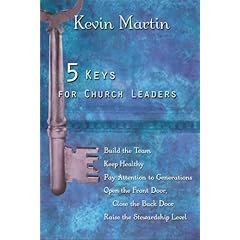
Second, I have been working my way through Kevin Martin's "5 Keys for Church Leaders". The first key he explores is that of the myth of the Pastor as CEO. His point is that in the twenty-first century, the Pastor or Priest is less the all-knowing expert and much more the group facilitator and encourager. I'm realizing that if I had actually read all of the books I own, I would have a huge amount of knowledge--only a fraction of which would likely be useful to me in the day-to-day activities of pastoral ministry. As someone who loves books and learning, it will be good for me to remember that.

Back to book sorting.....

Tuesday, September 01, 2009

New Call: St. Edward's, San Jose

As my current congregation is now aware, I have been called to, and accepted, a position as Priest-in-Charge of the Episcopal Church of St. Edward the Confessor (otherwise known as St. Edward's, or St. Ed's) in San Jose, California. My last Sunday at St. Alban's will be October 4th and my first Sunday at St. Ed's will be October 18. September will be a month in which my family and I pack all of our worldly belongings as well as all of our memories from what will end up being over seven and a half years of life and ministry here in Albany, Oregon. I have only just begun to process the move within myself, so perhaps some of that processing will eventually make it to this blog.

Until then, however, the moving boxes come out, the goodbyes have already started, and we're officially in transition!