Showing posts with label motivation. Show all posts

Thursday, July 24, 2014

Money as Fuel and the Why of What We Do

"In bad, unhealthy cultures, money is the goal....The great organizations, the great leaders, see money as a tool to further fuel whatever it is they are building. Of course they want financial success, because the more money they have. the more that they can protect their people....They see money as fuel, not as a destination." -- Simon Sinek
One of the great things about a sabbatical is not simply that one gets to go to a conference or seminar just because one is curious about it, but the fact that there is time to simply explore ideas. A couple of years ago, I ran across Jonathan Fields' Good Life Project, a video series of conversations with creative and interesting people. The above quote came from a recent conversation with Simon Sinek, where he talks about the power of serving others and fostering a corporate culture of safety so that people feel free to risk without reprisal if their idea or project fails.
He makes a comparison between General Electric, which was led by Jack Welch and focused on maximizing shareholder value, even to the extent of laying off people who didn't sufficiently contribute to the bottom line, and Costco, whose founder Jim Sinegal, set up a culture that pays workers well and values them. He noted that while the stock price of  GE fluctuated wildly since 1986 when  Costco went public, over the long-term one would have realized a 600% return on GE stock and a 1200% return on Costco stock if one sold each today. His point is that if you aim for wealth, you fail. If you aim for service, you win.

I've been thinking about how one might apply that to the church. In a TED talk he gave, Simon talks about the fact that people buy the "why" of what you do rather than the "what" that you are selling. In other words, people buy into the dream that is promised, not the product that is produced. We talk an awful lot about "stewardship" in the church--encouraging, almost demanding, that people give money to the church as a spiritual exercise. But in spite of that at least annual exhortation, people generally give the same amount--and it is generally anywhere from 1 to 2 percent of their income rather than the 10 percent tithe that is the "minimum standard of giving" in the Episcopal Church. Why? I suspect it is because we focus on all of the "products" (programs, worship, etc...) we are producing and not on why we are doing what we are doing. What is the dream into which we are inviting people to literally buy? If it is "keep the clergy employed, the lights on, and the services going," that isn't very compelling.

If, however, Good Samaritan Episcopal Church, and other churches, can make a compelling case for why we do what we do, and can care for people to such an extent that they will feel safe venturing out in faith, trust will naturally be built and presumably people will be willing to extend themselves both financially and physically in service to that dream. It then ceases to be about money and becomes a question of whether we have enough "fuel" to do the things that God has called us to do. Just like fuel for a car, everyone knows that the church needs money in order to do the things that God has called us to do, even in order to survive to do those things. Like a car, however, the question of where we are going with the full tank of gas that we have is an important one, especially if there is an expectation that our tank will be repeatedly refilled. People who give to churches rightly expect to know where the church is going and what the church is doing. However, they want to know even more what the dream is--what is the vision of the future toward which we aspire? That is the task before the Vestry and the clergy in the coming months and years: to define the dream.

Wednesday, September 09, 2009

Moving "The Library" and Thinking Ministry

As you might imagine, I am in the midst of packing up my church office and preparing boxes to be transported to my office at St. Edward's. As I do so, I am struck again by how many books I have accumulated over a mere thirteen-plus years of ordained ministry. Book accumulation is both a personal inclination and a professional near-necessity. Yet as I begin to sort through this decade-and-a-half (includes three years in seminary) accumulation, I am struck not only by the volume and variety, not to mention the many that I have either not read at all or not read in a decade or more, but that most of the information I get now is most readily accessible via the Internet. Why do I need a big heavy tome of "Who's Who in the Bible" when a couple of keystrokes can get me the same information? The answer, most of the time, is that I don't. Hence the "donate" pile grows ever larger.

As I think about that, and about ministry in general, two things strike me. First, that this readily accessible information fits in a bit too neatly with our culture's frantic pace. Rather than walking over to the bookshelf, bringing back a book or three to my desk, and bending over the desk for some serious, protracted, and substantial research, doing things like sermon preparation too easily fall into the "check the Internet" temptation. Want to know what others have written on that? Check the Internet. Want a good sermon illustration? Check the Internet. Don't get me wrong, I'm in many ways a child of the Internet, and I grew up (and will now once again be ministering) in Silicon Valley, so I am hardly averse to technology. Yet a computer screen is necessarily a less prayerful and deliberate medium than the pages of a book. As I transition to this new call, perhaps there are some lessons to be learned there.

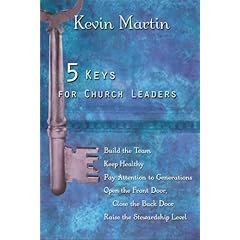
Second, I have been working my way through Kevin Martin's "5 Keys for Church Leaders". The first key he explores is that of the myth of the Pastor as CEO. His point is that in the twenty-first century, the Pastor or Priest is less the all-knowing expert and much more the group facilitator and encourager. I'm realizing that if I had actually read all of the books I own, I would have a huge amount of knowledge--only a fraction of which would likely be useful to me in the day-to-day activities of pastoral ministry. As someone who loves books and learning, it will be good for me to remember that.

Back to book sorting.....

Monday, May 25, 2009

Mission and Management

As the program year winds down, I'm feeling a bit different about church life and ministry. In years past there was the sense of having gotten through the program year and the anticipation of both taking a break from the sometimes frenetic pace of church life and planning for a Fall filled with possibilities. This year, owing primarily to the current economic climate but also to the ongoing challenges of connecting with a culture in transition, there is a palpable sense of unease as we enter summer. What does the future hold? How can we survive, much less thrive, in a time of tight budgets and only a trickle of newcomers to renew both our budget and sense of mission?

In the last 24 hours I've received information relating to both of those issues. In the latest update from The Barna Group, they discuss what mission and ministry looks like in the 21st century with the various "tribes" that they identify, including the "Casual Christians" they discuss. At the same time, I received the latest from the Alban Institute talking about different ways of viewing budgets. I can identify with both of these articles!

The biggest challenge for the church in 2009 would seem to be being about the work of mission and ministry in a culture that supports neither and in the midst of shrinking congregations and even more quickly shrinking budgets. The biggest challenge for me in leading a congregation is that many members seem perfectly happy with their level of spiritual maturity and their level of ministry to the community around them. What they are not happy with is the fact that "being church" seems to take more and more money. At the same time, nearly half the members of that surrounding community either have no experience whatsoever of church or just enough experience to know what they don't want to go back. They may not exactly be happy with their lives, but the notion that the answers to their unspoken (and perhaps even unacknowledged) questions lie with the church has either not even crossed their minds or, if it has, has been dismissed as soon as it did so.

So where does that leave us? It leaves us with a great number of churches that are content to simply wind down, keep doing what they're doing, and seek some magic solution even as they pine away for the good times of the past. It also leaves a gigantic void of spiritual need that might well be filled with churches who are willing to provide an accessible "spiritual stimulus" in the world by first knowing themselves to be in need of such a thing. If we can awaken what is referred to in the Baptismal service as an "inquiring and discerning heart" in the people of our congregations, we can then invite others on this journey of discovery. However, if we simply more strdently proclaim that we have the answer and if these poor misguided folks would just get out of bed on Sunday morning and come to church to find it, we will largely wait in vain for the door to be knocked down by the rush of newcomers.

So perhaps it's time to put our money where our ministry is and invite others to join us on the journey. Perhaps more now than at any time in the last 50 years we need to put aside fear and the natural impulse to preserve dwindling resources and look into a world in desperate physical and spiritual need and take some risks for God, both financially and spiritually. Of course, it is easy to blog about that and much more difficult to actually do it!

Monday, September 03, 2007

Labor and Love

It is Labor Day here in the United States, a day on which we honor all who, as the saying goes, put in an honest day's work for an honest day's pay. I personally am in the process of counting down the last two weeks of my Sabbatical, beginning to stir my heart and mind and consider both the church development project I will be undertaking as part of my course of study from the Church Development Institute, but also what, in the longer term, God might have in mind for St. Alban's and for me in the months and years to come. The work of a priest is both job and relationship, both the challenges of running a nonprofit business (sort of, since the church is hardly just another charity) and the ups and downs of a relationship that is much like a marriage -- with all of the joys and difficulties that such a covenant relationship brings.

As I contemplate my own ministry, I ran across this article in Episcopal Cafe regarding Mother Teresa's ministry in the slums of Calcutta. I have blogged earlier about how troubling it is for me that she labored so hard and so long while in spiritual darkness. However, the article gives a rather different take on it from someone who has actually worked in that ministry. After reading the article, I've somewhat changed my mind about the things I wrote in my earlier blog post. While it is always best to serve out of a conviction of purpose and relationship, I think that there is something to be said for simply living what you believe, serving Christ even in the absence of reassurance. After all, what relationship is perfect? How many marriages end simply because one or both partners don't "feel the love" strongly enough for their own comfort? Certainly, in both marriage and ministry, sometimes one must simply put one foot in front of the other and walk the path that has been set before us and make the journey to which we have committed ourselves.

Interesting thoughts for a Labor Day. Sometimes, the labor of love is truly labor, even if done in love.

Tuesday, May 01, 2007

Gloom or Gospel?

As I troll the various blogs (including the always informative Fr. Jake) whose authors opine about the state of the Episcopal Church and the Anglican Communion, and as I keep up with the various news stories (via the episCope blog), I am hardly encouraged. Yet, I find myself wondering if the current state of dis-ease and anxiety is simply a symptom of a larger problem: We have forgotten the good news! Unlike more evangelical churches, a sizable majority of the Episcopal Church does not subscribe to the idea that folks that do not declare faith in Christ are "lost", much less destined for hell. Because of this, we do not have the evangelistic fervor of people on a divine rescue mission. Rather, we seem often to be more like a server at a buffet or, at most, a street vendor hawking our wares. Our favorite quote is the one widely attributed to St. Francis: "Preach the Gospel at all times and, if necessary, use words." The caveat to this is that, at least in the Episcopalians I've met, the necessity for using words is rare!

My point in this is that I have for a long time felt that the greatest threat to the health and wellbeing of the Episcopal Church is not schism or even heresy, but silence. Most people I know are not even able to begin to articulate their own faith story, have little concept of God's ongoing work in their lives, and often come to church "because that's what you do on Sunday morning!" Even if they do have a healthy, vibrant faith and story, they are reluctant to share it, as if doing so would somehow be rude, gauche, or intrusive.

The question I have posed, and which I have never really received a satisfactory answer, is "What is our motivation for evangelism?" If we do not see ourselves on a divine rescue mission, if the concept of Jesus as Savior, much less Lord, is not something with which we are entirely comfortable, then what is the driving force behind Episcopal evangelism? Regardless of what happens in the Episcopal Church or the Anglican Communion, if we cannot answer that question with something compelling, then we risk sliding into moving from being the Domestic and Foreign Missionary Society (the legal name of the Episcopal Church) to the Society for the Preservation of Nice Buildings.