Showing posts with label ministry. Show all posts

Sunday, July 10, 2016

New Ministry, New Opportunities, Goodbye to old friends


After more than a year, I have broken my blogging silence to announce the happy news that I have been called to be Rector of St. Mark's Episcopal Church in Medford, Oregon! These last six months have been difficult for my family and me as we contemplated what was the decision on June 4 by the Vestry of Good Samaritan Episcopal Church (my current parish) to retain Fr. Mike Ferrito as sole Rector and to release me to pursue other ministries. At that time, what those other ministries would be was an open question with a dozen or so search processes in progress. However, I'm pleased to report that I will be moving six hours north of here in San Jose to pursue and enable ministry in the Rogue Valley of southern Oregon.

Friends, family, and readers of this blog may recall that this is a return to the Diocese of Oregon for me, as I served for over seven years as Vicar of St. Alban's Episcopal Church in Albany, Oregon from 2002 tr 2009. In a somewhat interesting twist, it was less than 24 hours before I received this call that The Rev. Robert Morrison was formally welcomed as my successor as Vicar of St. Alban's in a service there!

While I look forward to new opportunities and challenges in ministry, I will be sorry to bid farewell to friends at Good Samaritan and in the Diocese of El Camino Real. I have spent over six years here in ministry and would like to thank Bishop Mary Gray-Reeves for all of her support for me and the congregation I led for that time. I'm grateful to her and to my colleagues in the diocese.

I begin my ministry at St. Mark's on September 1, so have six weeks of frantic activity in front of my family and me!

Saturday, May 31, 2014

On Sabbatical: Back to Blogging

As of tomorrow morning, I will officially be on Sabbatical. A Sabbatical, for those not familiar with previous sabbatical, I'll be blogging fairly regularly.
The cleanest the office has been in years...
the term, is a lengthy period of rest, refreshment, and re-formation afforded to clergy and professors. Clergy Sabbaticals are not intended simply as a long period of rest and relaxation, but a time to step out of day-to-day church life, have some new experiences, learn some new things, and return to church rested, refreshed, and bearing new ideas and/or new perspectives that will assist in both congregational and personal ministry. As I did in my

My hopes and plans for this Sabbatical are threefold:
  1. Technology. I'm really eager to explore the world of blogging, video blogging, and social media in general more deeply. It seems like this is an emerging evangelistic medium and, as I am not a big fan of door-to-door evangelism, it also seems like it would be a great option and opportunity for me. I'll be attending the eFormation conference at Virginia Theological Seminary (my alma mater!) to get a taste of the possibilities. I'm also hoping to take some seminars on video production.
  2. Spirituality. One of the great ironies of professional pastoral ministry is that running the "business" of the church can often crown out time for deepening one's spiritual life. Since my last Sabbatical, I've been intrigued by Benedictine spirituality and will be doing some research on, and experimentation with, that. I'm also going to be attending a retreat at Mount Calvary Benedictine Monastery in Santa Barbara.
  3. Family and Household. The world runs really fast, and this is also true of pastoral ministry. I'm hoping and planning on doing a lot more focusing on my family and taking time to be with them. I'm also hoping to get some long-postponed projects completed around the Rectory, so we can more fully live here and make it completely our own.
That's pretty much it for now. No church in the morning for me--but lots of church this week!

Friday, August 02, 2013

Relief and (Re-) Development: Desparation and Dependency

Good intentions without action don't accomplish much, but what action is needed?.
I recently finished reading the book Toxic Charity: How Churches and Charities Hurt Those They Help (And How to Reverse It) by Robert Lupton. Perhaps the best part of the book is this one:
...in 2001, six years after Hurricane Katrina struck New Orleans and long after the city should have shifted to long-term development projects, churches and mission organizations still "market" the crisis and volunteers continue to flow into the city by the thousands, distributing free food and clothing to "victims." When relief does not transition to development in a timely way, compassion becomes toxic.
He quotes Roger Sandberg, former Haiti country director of Medair, in defining a progression from relief to development:
First stop, relief. Relief work occurs during and immediately following an emergency and includes not only life-saving interventions but also the alleviation of suffering.
Second stop, rehabilitation. Rehabilitation follows and overlaps with the relief phase. Rehabilitative work increases the capacity of a local community, enabling them to better respond to future crises. Rehabilitation also seeks to promote projects that restore services or livelihoods to a preexisting or improved level.
Third stop, development. Development interventions follow and overlap relief and rehabilitation phases. Development work is long term. It seeks to improve the standard of living for a population over many years or decades. In the best-case scenario, relief and rehabilitation inverventions are done with long-term development in mind....Very roughly, we might say that relief, rehabilitation, and development phases respectively last months, years, and decades.
This particular distinction between relief, rehabilitation, and development has been on my mind in the last several months in three areas of my life: local, national, and international.

On a local level, as a parish priest I respond to urgent crises through small grants from my discretionary fund--a fund set up by the church to be used at my discretion (hence the name) to address needs as they arise. Most of the time, it is used to do things like provide two quarts of oil and a tank of gas to needy folks heading for San Francisco or a hotel room for a mother and her kids fleeing an abusive husband/father. This is all good to do, but leaves me feeling dissatisfied because I know that I'm simply doing relief work, not solving the underlying problems. It also frustrates and angers me when I see an unending procession of need, sometimes event the same people over and over again. I have the dual feeling of being angry at being taken advantage of and yet ashamed of that anger because i know that ninety-five percent of thse folks have few other options.

On a national level, I've watched with increasing frustration as our national debate regarding cuts to the Supplimental Nutritional Assistance Program (SNAP, formerly Food Stamps) between, if you believe the two sides, the heartless, cold-blooded Republicans and the bleeding-heart, dependency-fostering Democrats. Below the partisan posturing is a disagreement about whether (and when) relief of suffering should stop and whether (and when) government should be in the business of rehabilitation and development to help people lift themselves out of poverty and need. There seems to be little discussion of how the government can facilitate increasing the capacity of people to respond to future crises--just whether we should still send checks or not. Additionally, the notion of separating people into "givers" and "takers" strikes me as a profoundly unhelpful way of wrestsling with the need to go beyond relief to rehabilitation and development. Throwing a drowning person a life-ring will not foster dependency. Jumping in and trying to hold them up means that both of you end up drowning.

On an international level, several months ago I spent a week in Haiti. That country is perhaps the poster child (yes, I appreciate the irony of the phrase) for perpetual relief verging on the toxic. Literally billions of dollars have been spent there, often with major strings attached in the name of accountability. At the parish I serve, St. Edward's, we are a part of consortium of churches and a school that have a relationship with St. Patrick's Church and School in LaCorbe, Haiti. Having had a relationship with people there for many years, we are beginning to discuss how to move from continually addressing immediate needs to building the capacity for the community to begin to provide for themselves. There is certainly a tension between what they perceive as their immediate needs and what we hope for as far as long term rehabilitation and development. Part of the challenge is that we have the luxury of taking the long view. A good example is that there is a need for a power source at this fairly remote chruch and school. As enlightened, developed-world folks, we would prefer to set up a small solar installation that would then be self-sustaining. However, our partner in Haiti would like a gasoline generator so that he could haul it around and use it for a variety of congregations and schools. Both make sense in their own way. On the one hand, we don't want to do what so many NGOs have done in Haiti and impose our own will on them. On the other, we don't really want to perpetuate a reliance on expensive fossel fruels. Difficult decisions.

I have no easy answers to any of this, but it does strike me that we need to be having these sorts of conversations at all levels of government and within our churches. Just writing a check, as much as it helps in the short-term, stops at relief without moving beyond that. If we can get to the point of true partnership where we help people to get and stay on their feet, perhaps we can move beyond the gridlock in both government and society.

Wednesday, February 23, 2011

Ministry of The Word and Sacrament

One of my colleagues passed this along to me:


Walter Brueggemann is arguably one of the primary movers and shakers in the theological world today. His critique, sparked by a conversation with a rabbi, that we as preachers spend the bulk of our time engaged in everything but preaching or preparing for preaching, and end up devoting a few remaining hours in our week after we've exhausted ourselves with other things, strikes a little too close to home for comfort. My desk is currently strewn not with books, articles, and sermon drafts, but with catalogs, various pieces of mail, budget drafts, and various other items primarily having to do with administration and the day-to-day minutia of running a religious non-profit corporation that happens to be a church. And, yes, I generally do not get to serious sermon preparation until later in the week, occasionally even sitting in front of a computer screen on Saturday evening finishing up what I'm going to say the next morning!

That fact sparks in me a thought about the different names that we're called as ordained ministers: pastors (means "shepherd"), priests (not very much anymore), ministers (though much more ministry is done by the many church members serving in the community), and (in my case) "Father" (which places the priest in the role as "father" of the church "family", which is often less than helpful). I know if few, if any, times in which I've been referred to as "preacher"--and yet that is a key part of what I do each week: speak God's words to God's people. My ordination vows place as one my primary tasks the "ministry of Word and Sacrament", by which is primarily meant preaching and administering the sacraments. Those two tasks do not seem to have the same urgency during the week as the "running the shop" tasks do, nor are preachers generally rewarded or given points for reading and studying. If a church member or board member asks a pastor "What are you up to today?" and receives the answer "Well, doing a lot of reading and some prayer" it sounds almost as if he or she is taking a vacation! That is because most people work at jobs that not only don't require much study (and zero prayer) but often preclude study and prayer. Thus, the often unconscious reaction for most folks is "Wow, I wish that I could get paid to sit around and read and pray!"

The fact is, however, that we our primary calling is feeding the flock of Christ. Jesus' first post-resurrection commission to Peter was "feed my sheep." Putting aside the comparison of church members to sheep, as preachers and pastors we cannot give what we do not have. If we have not studied and prayed, we will give shallow, largely meaningless sermons that do not even come close to satisfying the spiritual hunger that God places in each one of us. Perhaps we need to take more seriously the rabbinical side of our calling--to be the teacher and the scholar.

One of the things that I hope and plan to do this year is to get a bit more focus on my preaching--both by setting aside more time for preparation and by focusing my continuing education funds and time on honing those skills. Preaching is one of my gifts. Administration is not. However, since others can do administration but not as many can do preaching, it makes sense to hone my strengths rather than attempting to shore up my weak areas.

Thursday, September 30, 2010

Visionary Leadership vs. Cult of Personality (updated)

UPDATE: I just ran across the following video presentation on Steve Jobs and Apple Computer. It has a lot to say about the cult of personality verses a culture of vision:


One of the things I struggle with in my own ministry is how proactive to be in my leadership. I've seen (mostly evangelical) churches where the pastor (or, sometimes, the pastor and his wife) are front and center in advertisements and promotional materials, and it is very clear that this is "Pastor X's Church." Among the many difficulties with that is that when the pastor moves on or, God forbid, has some moral failing, that loss has an incredibly huge impact on the congregation, much more so than it might if the pastor were just another staff member. How do you have Pastor X's Church without Pastor X? On the other side, it is quite clear that the pastor of any church has enormous impact in all areas of church life--spiritual, financial, programming, etc... Leadership does matter, and as much as we talk about delegating authority and broadening our leadership base, someone has to be the point person and say "We're going THERE!" Committees don't do that nearly as well as a single individual.

The other issue with a single leader versus a shared leadership model is the cognitive dissonance that people go through. On the one hand, people crave clarity and stability and so are often happy to follow a leader who is self-assured and at least appears to have a good grasp on things. On the other hand, there is a deep distrust in our country of people with any sort of power. We can see it at work in our national politics, with the warnings of people "taking over" or "ramming things through." We seem to be intellectually more comfortable with distributed power and shared leadership, but our hearts know what our brains often forget--there is no substitute for a clear vision and direction and a visionary leader to cast that vision and support it.

As we enter October, the church moves from the rush of the beginning of the program year to thinking about what is variously called stewardship season, the Fall Pledge Drive, or any number of other names. It is a time when we quite literally ask people to buy into a vision, to support it with both their money and their time. The more specific and compelling that vision is, presumably the easier it is to achieve such buy-in. Yet this is not my church, it is God's church and the congregation can do far more collectively than I can do individually. So we are back to the conundrum--do we make the pastor the focus in the interest of having a more focused vision or do we have a more distributed leadership in the interest of sharing power and inviting more participation? Like anything else, it is a delicate dance...

Monday, May 24, 2010

Ministry Navigation in Uncharted Waters

As we continue in the beginning year of this second decade of the new millennium, it is becoming increasingly evident that we are beginning to embark on a journey into uncharted waters. Whether politically, socially, or even religiously, we are seeing institutions, the rationale behind such institutions, and the ability to fund them adequately, rapidly eroding in the face of a substantially more diverse and less duty-bound population. This is no less true in the church--we are rapidly losing the generations that felt it was their duty to attend church on Sunday mornings and those few newcomers that show up on Sunday mornings justifiably need a compelling reason to even stay through the service, much less come back again the next week!

As an Episcopal priest, I am by definition a representative of an institution. While I do not begrudge that fact, and appreciate the support and accountability that goes with it, it is sometimes like captaining a battleship an an era of fast patrol boats--as impressive as the hardware is, one increasingly wonders how useful and practical such institutional accouterments are. The church feels like it is increasingly in need of fast scout ships to chart out the road ahead, not massive battleships to withstand the secular onslaught.  We are launching out into uncharted waters with few, if any, markers to help us find our way.

It is clear that in the twenty-first century, churches will need to intentionally be places of formation, community, and service and they will need to be clear about what sort of Christian formation they are doing, why that is important, why it is important that it be done in community, and why service is both the thing that we attend and the work that we do afterward. This will be a tremendous challenge to both the church and to those of us who were trained under the old institutional paradigm. It will be an exciting journey, but not a comfortable one.

Wednesday, September 09, 2009

Moving "The Library" and Thinking Ministry

As you might imagine, I am in the midst of packing up my church office and preparing boxes to be transported to my office at St. Edward's. As I do so, I am struck again by how many books I have accumulated over a mere thirteen-plus years of ordained ministry. Book accumulation is both a personal inclination and a professional near-necessity. Yet as I begin to sort through this decade-and-a-half (includes three years in seminary) accumulation, I am struck not only by the volume and variety, not to mention the many that I have either not read at all or not read in a decade or more, but that most of the information I get now is most readily accessible via the Internet. Why do I need a big heavy tome of "Who's Who in the Bible" when a couple of keystrokes can get me the same information? The answer, most of the time, is that I don't. Hence the "donate" pile grows ever larger.

As I think about that, and about ministry in general, two things strike me. First, that this readily accessible information fits in a bit too neatly with our culture's frantic pace. Rather than walking over to the bookshelf, bringing back a book or three to my desk, and bending over the desk for some serious, protracted, and substantial research, doing things like sermon preparation too easily fall into the "check the Internet" temptation. Want to know what others have written on that? Check the Internet. Want a good sermon illustration? Check the Internet. Don't get me wrong, I'm in many ways a child of the Internet, and I grew up (and will now once again be ministering) in Silicon Valley, so I am hardly averse to technology. Yet a computer screen is necessarily a less prayerful and deliberate medium than the pages of a book. As I transition to this new call, perhaps there are some lessons to be learned there.

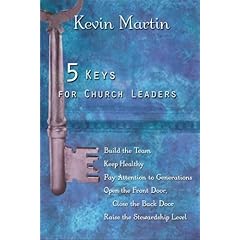
Second, I have been working my way through Kevin Martin's "5 Keys for Church Leaders". The first key he explores is that of the myth of the Pastor as CEO. His point is that in the twenty-first century, the Pastor or Priest is less the all-knowing expert and much more the group facilitator and encourager. I'm realizing that if I had actually read all of the books I own, I would have a huge amount of knowledge--only a fraction of which would likely be useful to me in the day-to-day activities of pastoral ministry. As someone who loves books and learning, it will be good for me to remember that.

Back to book sorting.....

Monday, May 25, 2009

Mission and Management

As the program year winds down, I'm feeling a bit different about church life and ministry. In years past there was the sense of having gotten through the program year and the anticipation of both taking a break from the sometimes frenetic pace of church life and planning for a Fall filled with possibilities. This year, owing primarily to the current economic climate but also to the ongoing challenges of connecting with a culture in transition, there is a palpable sense of unease as we enter summer. What does the future hold? How can we survive, much less thrive, in a time of tight budgets and only a trickle of newcomers to renew both our budget and sense of mission?

In the last 24 hours I've received information relating to both of those issues. In the latest update from The Barna Group, they discuss what mission and ministry looks like in the 21st century with the various "tribes" that they identify, including the "Casual Christians" they discuss. At the same time, I received the latest from the Alban Institute talking about different ways of viewing budgets. I can identify with both of these articles!

The biggest challenge for the church in 2009 would seem to be being about the work of mission and ministry in a culture that supports neither and in the midst of shrinking congregations and even more quickly shrinking budgets. The biggest challenge for me in leading a congregation is that many members seem perfectly happy with their level of spiritual maturity and their level of ministry to the community around them. What they are not happy with is the fact that "being church" seems to take more and more money. At the same time, nearly half the members of that surrounding community either have no experience whatsoever of church or just enough experience to know what they don't want to go back. They may not exactly be happy with their lives, but the notion that the answers to their unspoken (and perhaps even unacknowledged) questions lie with the church has either not even crossed their minds or, if it has, has been dismissed as soon as it did so.

So where does that leave us? It leaves us with a great number of churches that are content to simply wind down, keep doing what they're doing, and seek some magic solution even as they pine away for the good times of the past. It also leaves a gigantic void of spiritual need that might well be filled with churches who are willing to provide an accessible "spiritual stimulus" in the world by first knowing themselves to be in need of such a thing. If we can awaken what is referred to in the Baptismal service as an "inquiring and discerning heart" in the people of our congregations, we can then invite others on this journey of discovery. However, if we simply more strdently proclaim that we have the answer and if these poor misguided folks would just get out of bed on Sunday morning and come to church to find it, we will largely wait in vain for the door to be knocked down by the rush of newcomers.

So perhaps it's time to put our money where our ministry is and invite others to join us on the journey. Perhaps more now than at any time in the last 50 years we need to put aside fear and the natural impulse to preserve dwindling resources and look into a world in desperate physical and spiritual need and take some risks for God, both financially and spiritually. Of course, it is easy to blog about that and much more difficult to actually do it!

Monday, January 12, 2009

Barna and The Belief Buffet

Although just one of many voices, George Barna has made a career out of taking the religious pulse of the United States and suggesting the implications of those results for individuals, churches, and the country as a whole. His latest offering, headlined "Christianity is No Longer America's Default Faith" explores the increasing tendency of Americans to either choose no faith at all or to pick and choose from a variety of beliefs and spiritual practices to meet their needs. The article is a good one, well worth reading, and the implications of the study results are summed up at the end as follows:
  1. The Christian faith is less of a life perspective that challenges the supremacy of individualism as it is a faith being defined through individualism. Americans are increasingly comfortable picking and choosing what they deem to be helpful and accurate theological views and have become comfortable discarding the rest of the teachings in the Bible.

  2. Growing numbers of people now serve as their own theologian-in-residence. One consequence is that Americans are embracing an unpredictable and contradictory body of beliefs. Barna pointed out, as examples, that millions of people who consider themselves to be Christian now believe that the Bible is totally accurate in all of the lessons it teaches at the same time that they believe Jesus Christ sinned. Millions also contend that they will experience eternal salvation because they confessed their sins and accepted Christ as their savior, but also believe that a person can do enough good works to earn eternal salvation.

  3. In the past, when most people determined their theological and moral points of view, the alternatives from which they chose were exclusively of Christian options - e.g., the Methodist point of view, the Baptist perspective, Catholic teaching, and so forth. Today, Americans are more likely to pit a variety of non-Christian options against various Christian-based views. This has resulted in an abundance of unique worldviews based on personal combinations of theology drawn from a smattering of world religions such as Christianity, Buddhism, Judaism, Hinduism, and Islam as well as secularism.

  4. Faith, of whatever variety, is increasingly viral rather than pedagogical. With people spending less time reading the Bible, and becoming less engaged in activities that deepen their biblical literacy, faith views are more often adopted on the basis of dialogue, self-reflection, and observation than teaching. Feelings and emotions now play a significant role in the development of people’s faith views - in many cases, much more significant than information-based exercises such as listening to preaching and participating in Bible study.
It almost goes without saying that this has huge implications for the church, especially the Episcopal Church which is both very rooted in words (Bible, Prayer Book, Hymnal, etc...) while also being rich in multi-sensory symbols (water of baptism, bread and wine of Eucharist, candles, stained glass, etc...). The traditional Evangelical way of converting folks to Christianity and enriching their spiritual lives focuses primarily on preaching and Bible study. The above statements reflect the fact that people are becoming more individualistic, less likely to have (or take) the time to do much Bible study (much less do serious theological reflection), and are perfectly comfortable with holding contradictory views taken from a variety of religious traditions. This is sometimes, in my opinion, without actually knowing much about their own faith tradition (if they have one)! A great example of this is the practice of a Christian incorporating Buddhist meditation practices into his or her spiritual practice without realizing that there is a rich Christian tradition of contemplative prayer from which to draw without having to graft in practices from another faith tradition. Of special note is the last observation that "faith views are more often adopted on the basis of dialogue, self-reflection, and observation than teaching."

I would suggest that, at its best and done well, worship in the Episcopal Church and associated programs that emphasize such
dialogue, self-reflection, and observation are the primary means by which we might best enter into the conversation that is likely to be the only way to conversion for most people. The challenge for us is to do such things ourselves rather than taking who we are and what we do for granted. The misquoted line from Field of Dreams "If we build it, they will come" (it is actually "If you build it, he will come.") applies here. We can build anything we want: people are not coming unless they have a reasonable expectation of finding a place in which they can enter into dialogue without limitations or pretense, self-reflection without pressure to conform, and observation without pressure to participate.

Quite a tall order for the church at the dawn of the twenty-first century!

Monday, July 07, 2008

Fr. Tom, Bishop Tom, and the Anglican Communion

Through various blogs, I was recently directed to an article by The Rt. Rev. N.T. (Tom) Wright, Bishop of Durham on GAFCON, his initial reactions to it, and the continuing discussions. One of the interesting things I find in his essay is the assertion that, to quote, "...there are huge problems in America, and they are of course reflected here and there in the C of E, but we are NOT AT ALL in the same situation." In the article, he describes the persecution of clergy by so-called "liberal" bishops for teaching traditional Christian doctrine, noting that "I continue to stand where I have always stood, that is, shoulder to shoulder with those in the USA who have suffered much for the sake of their allegiance to this same gospel and standard of behaviour [sic]." What he is saying, in effect, is that while there are isolated incidents of liberalism making inroads into the Church of England, apparently we are much farther gone in the United States.

As a professed centrist with evangelical leanings as well as a priest who passionately loves both God in Jesus Christ as well as the Episcopal Church which nurtured my faith in Christ and as someone in agreement with the so-called 'core doctrines' of the faith as expressed in the Nicene and Apostles Creeds, the implication that clergy with precisely the same centrist outlook as mine are being actively persecuted by their bishops and colleagues for teaching core orthodox Christian doctrines is profoundly troubling to me and verges on the frightening. If he is not overstating the case, and there are truly clergy being persecuted for their teaching (not simply disciplined for schismatic activity) then I would like to know about that and it needs to be addressed immediately.

Bishop Wright goes on to state the following:
"As I look around not only my own diocese but also the larger Church of England, I see many clergy and laity who are not from an ‘evangelical‘ stable but who are cheerfully preaching the gospel, working for God’s kingdom, saying their prayers and living lives of faithful holiness."
As I read that quote, I thought to myself: "I can affirm that here, too!" I interact with clergy in my own diocese and in the Episcopal Church though Gathering the Next Generation (GTNG) and the Church Development Institute (CDI)) and see people "cheerfully preaching the gospel, working for God's kingdom, saying their prayers and living lives of faithful holiness." I think it is a huge mistake to think otherwise based upon news reports, blog entries, or strident statements from official or quasi-official sources.

Not to be too (literally!) parochial, but most of us clergy, I suspect, have enough difficulties dealing with the challenges of leading a congregation in this twenty-first century post-Christian context. We spend our days dealing with anemic parish budgets, both delightful and difficult people, wide-ranging demands on our time and attention, and the myriad of other pastoral care issues and administrivia that fill our days. We do all of this while attempting to see to our spiritual health, keep our families healthy, happy, and not hating or resenting the church for taking up so much of our time, and just generally getting on with the business of living lives as faithful to our Baptismal Covenant and our marriage and ordination vows as possible. Most of us have neither the time nor the energy to pay much attention to the controversies raging across the Anglican Communion. Not only that, but it is often detrimental to our spiritual health to do so!

Finally, I think a myth really needs debunking here. The myth that one cannot be a faithful Christian or priest in a diocese in which the bishop and/or a majority of the clergy hold so-called "heterodox" or "liberal" views is, quite simply, wrong. Having been raised in the Diocese of California, served my early years of ordained ministry in the Diocese of Pennsylvania, and now serving in the Diocese of Oregon, I can confidently say that as a priest I have never, ever, had a conversation with my bishop or other diocesan authority about my theological views, what I preach and teach, or anything remotely resembling what Bishop Wright appears to be saying is happening. While I would characterize my current diocese as decidedly middle-of-the-road, both California and Pennsylvania are hardly bastions of conservatism!

I'm not sure what to expect from the upcoming Lambeth Conference. I am just optimistic enough that I hope that a statement affirming the primacy of relationships over issues or doctrines might emerge. We are unlikely to have a resolution to the questions surrounding homosexuality anytime soon, perhaps not even in my lifetime. Yet if we are to share the love of Jesus Christ we need to discern a way forward though the current strife that honors God and each other.

Friday, June 06, 2008

Evangelism, Conversion, and Mission


I just ran across the Episcopal News Service (ENS) story on the "Everyone, Everywhere" missions conference currently happening in Maryland. While I'm pleased that the Episcopal Church is talking about mission, I don't notice much about evangelism. Even when conversion is discussed in the article, it is done so only in the context of the "perils of conversion" mentioned by The Rev. Paul-Gordon Chandler, Episcopal missionary and author and the conference's June 6 plenary speaker.

It seems to me that the Episcopal Church in the 21st century appears to think of mission exclusively in terms of social service, relief of suffering, and development. Episcopal Relief and Development, a wonderful agency, thus seems to be our primary "evangelism" tool. In a church that is losing members daily, I find it somewhat disquieting that evangelism is number three on the list of the Episcopal Church's five budget priorities.

As much as I applaud an emphasis on the Millennium Development Goals, I'm wondering if we're simply substituting something that the Episcopal Church has generally been unable to do well--evanglism--with something with which we have had more success--social service. While I don't think this is an either/or proposition, I do think that we have perhaps had the pendulum swing too far over from the evangelism side to the social service side. A balanced approach would seem to be needed. Perhaps we need to be less linear and more circular in our thinking. Rather than simply implicitly saying "My faith compels me to be of direct physical service to Christ in all people" and letting it stop there, might we also then say "My service to Christ in all people is part of the story of my faith that is worth sharing"?

If a life-transforming relationship with Jesus Christ is the goal, and the mission of the church is to "restore all people to unity with God an each other in Christ" (BCP, p. 855) then how will that be accomplished without at least a mention of that transforming relationship and the unique role of Jesus Christ in our unity with God? Inquiring minds want to know...

Sunday, June 01, 2008

Relationaships and Resources

I just returned from a meeting of our Convocation (Deanery) at which we spent more than an hour going through and discussing the diocesan budget draft. About as enjoyable as root canal surgery but without the numbing drugs. I have had similarly long and less-than-pleasant discussions at our Bishop's Advisory Committee (Vestry) meetings. There always seems to be a sense in which we are running around plugging leaks in a boat and there are more leaks than we have hands or other means of plugging them. That culture of scarcity, that sense that there is never enough, it pervasive throughout the modern church, at least in my experience.

As I thought about those conversations, I reflected that really what these conversations are about is not our resources (time, money, energy, etc...) but our relationships. Budget problems are a symptom, not the disease. The disease is a breakdown of relationship. In the case of a diocesan budget, it is the relationship between the diocese as a whole and its individual missions and parishes. In the case of a congregation, it is a breadown in relationship between the members of the congregation and their church, pastor, or even God.

The solution to this breach in relationship is the Christian solution: reconciliation. It is a combination of a responsiveness of the wider organization as well as transparency and clear communication on the one hand and a recognition that the church does not operate on a fee-for-service basis but on the basis of free gifts with no strings attached. We ar not a retail establishment, providing sacred products for a specified fee. However, there is no biblical mandate for most of the programs and business practices of a congregation or a diocese. For that reason, as well as the biblical mandate for transparency, there must be responsiveness to the mission of the church as discerned through the members of that church or diocese.

I'm not exactly sure where I'm going with this, but it just seems to me that as an anxious church in a very anxious and transitional time, finances dominate our attention and I'm not at all sure how to go about getting out of that cycle without a wholesale rethinking of who we are and how we function as a church surrounded by a consumer culture.

Saturday, May 03, 2008

It's all about Jesus

There is a great deal of material to be found across the web, in blog after blog, about the trials and travails of the Episcopal Church. People have dug into canonical processes, hierarchical charts, and accusations and counter-accusations. It sometimes seems as if this particular part of the Body of Christ is at war with itself. As I thought about that, a passage from St. Paul's letter to the Romans came to mind:
So I find this law at work: When I want to do good, evil is right there with me. For in my inner being I delight in God's law; but I see another law at work in the members of my body, waging war against the law of my mind and making me a prisoner of the law of sin at work within my members. What a wretched man I am! Who will rescue me from this body of death? Thanks be to God—through Jesus Christ our Lord! (Romans 7:21-25)
I certainly find this at work in my own life--even when I want to do good, even when my "inner being" delights in God's law, there is sometimes the sense of spiritual lethargy that sneaks up on me and the battle is joined between good and evil, right there in the choices I make each day. Might I submit that the same is true in the church? Certainly, as the Body of Christ, we do not have the same essence as the corporate, political, or social structures. The Body of Christ, like Christ himself, does not have a "sinful nature." Yet, to the extent that the Body of Christ is made up of flawed, human, and sinful "members," we do not function to our fullest or in perfect harmony. We are always subject to dis-ease, that is, anxiety and lack of focus and vision.

The only solution to this, it would seem to me, is the solution that St. Paul offers: God through Jesus Christ. After all, it really is all about Jesus. I ran across a great sermon by The Rev. Frank Logue, Rector of King of Peace Episcopal Church in Kingsland, Georgia, referenced in his blog regarding the scriptures appointed for tomorrow. The point of the sermon, and of the illustration contained within it, is that the members of the church are the only "plan" to spread the Gospel, the good news of God's plan of salvation. There isn't a Plan B. For that reason, it is all the more important for the church to focus on that message.

After all of the lawsuits, the accusations, the counter-accusations, the charges of heresy, apostasy, all of the name-calling and labeling, what really matters is our relationship with Christ. What really matters is Jesus. We are in a world that is changing every minute and that does not appear to be getting better in the changing. Nothing is solid, nothing stable. This is not unlike the first century church, where there was massive upheaval. Into that maelstrom of persecution, dis-ease, and anxiety, what does St. Peter say in tomorrow's Epistle?
Humble yourselves therefore under the mighty hand of God, so that he may exalt you in due time. Cast all your anxiety on him, because he cares for you. Discipline yourselves, keep alert. Like a roaring lion your adversary the devil prowls around, looking for someone to devour. (1 Peter 5:6-8)
It strikes me that the biggest temptation we face as a church in today's world is not the temptation to commit blatant sin, to rebel against God, or even to go off on our own and neglect our relationship with God. The greatest threat to the contemporary church may be the temptation towards complacency, despair, or lethargy. How many new ministries are we raising up? How many churches are we planting? How many disciples are we making? From all accounts, not nearly enough. We still have a death grip on what has gone before, on what we used to have, on what the world was like. We are often so afraid of losing what we have, we are not open enough to what God may yet have for us. That is the true danger--that, like the disciples, we are still looking up and waiting for God to save us rather than knowing that we are empowered by the Holy Spirit for mission and ministry.

If we use the analogy of the lion, the church's greatest difficulty is that we are not alert for the danger of that roaring lion, we are simply milling around, often oblivious, and sometimes disinclined to run anymore. If we keep our focus on the Lion of Judah, that is, Jesus, and a wary eye on that other lion, perhaps we will be a little less likely to mope around, whine, and complain, and more likely to get on with mission and ministry in the world. After all, the lion is still out there.

Sunday, December 30, 2007

Looking backward, Going forward

As I vacation with my immediate and extended families in California, I am struck anew by the flurry of cultural, economic, technological, and media retrospectives on 2007. As yet I have not found an Anglican/Episcopal retrospective, but I'm sure someone in the blogosphere will put one together soon (if you know of one, feel free to leave it in the comments section of this post). I am also less than two months away from turning 40 years old, always an occasion for both looking back and looking forward. As the Anglican/Episcopal world convulses and raises questions of identity, structure, and purpose, I've also been thinking about my own identity as an Episcopal priest and my own values for ministry on which I hope to focus a bit more purposefully in 2008. Those values are:
1) The transformational power of faith in Jesus Christ.

Perhaps it is my own grounding in the evangelical flavor of Christianity, but my own belief is that if the church is not standing up and proclaiming that being a disciple of Jesus Christ is not just a nice thing to do, a trendy (or counter-trendy) lifestyle, or even something that changes your world-view but something that fundamentally transforms one's life in both real and mysterious ways, I'm not sure what exactly we're here for. If you want to serve, there are plenty of service clubs around. If you want to learn, there are many blogs, podcasts, video courses, and even classroom-based opportunities for learning. If you want to socialize, there are likewise plenty of social clubs (including social networking web sites) in which you can join. Heck, even worship of God is something that one can do alone with an iPod, at least to some extent!

I am at once frustrated with my own tendency to 'put God on hold' amidst the pressures and demands of life and ministry and frustrated with the tendency of the church to be so self-absorbed with similar demands that there is little time given for exploring our relationship with God in Christ. So little, in fact, that many people in the pews have no idea what I'm talking about when I mention such a relationship! For 2008, I want to 'go deeper with God' and invite members of the congregation I serve to go there as well.

2) Being grounded in traditional Christianity and yet drawn to fresh expressions of the church through the emerging church and missional movements.

I'm an anomoly--a Generation Xer who grew up in a very traditional, middle-of-the-road Episcopal church in Silicon Valley with parents that are still together to this day. I didn't suffer from a broken home, a broken faith, or a broken church. We had major players from Silicon Valley companies in our congregation, but no one would have dared suggest that we incorporate the least bit of technology into our services. At the same time, the rest of my life was saturated with cutting-edge technology as well as cutting-edge ideas. I married that very traditional liturgical church upbringing with an evangelical fervor caught in high school and fanned into flame during my college years at InterVarsity Christian Fellowship at Humboldt State University. Even so, I am drawn to fresh expressions of being a disciple of Jesus Christ. These are often expressed in the emerging church and missional church movements.

All that is to say that while I'm grounded in traditional expressions of Christianity, I'm searching for ways to live out my calling as an Episcopal priest in the very exciting world of the emerging church without losing that traditional base and evangelical fervor. I suspect that exploration will continue in 2008, primarily through the addition of a new evening 'alternative service' to the very traditional service currently at the church I serve.

3) Love of technology as a tool for ministry.

I'll admit it--I love technology with a passion. Raised in Silicon Valley and in high school at the beginning of the technology wave, I'm as fully plugged in as my time and money allow. I obviously blog regularly, check my e-mail constantly, monitor a variety of blogs, and essentially live on the Internet, with only one exception--my ordained ministry. Sure, I use the Internet to get ideas, illustrations, and examples for sermons, but the church I serve has no real value for technology as a tool for ministry. This is not limited to my current congregation. There have been plenty of folks over the years who wonder why I'm on the computer 'so much' and exactly what I'm doing there. I will readily admit that occasionally the lure of technology overwhelms my call to on-the-ground ministry.

So, in 2008 I'm resolving to explore ways to unite my love of the church with my love of technology, all under the umbrella of being a more faithful disciple of Jesus Christ and a more effective priest of the church. Viewing technology as a tool for ministry rather than simply a toy for entertainment means being more focused in my use of technology and my learning about how best to integrate it into my ministry. It also means making sure that I do not neglect face-to-face ministry in favor of 'screen-to-screen' ministry.
We'll see how all of this goes. I'm mindful that most people break New Year's resolutions before the end of January. Hopefully by my birthday at the end of February, I'll still be plugging along!