Showing posts with label democracy. Show all posts

Wednesday, November 30, 2016

Send in the Clowns: Political Theatre and the Current Political Climate

It has been nearly a month since Election Night and, for many who had hoped for a continuing journey along the path of social and economic progress, a continued process of stumbling along the slow, tortuous path of racial reconciliation, things have not noticeably improved. The news media, having discovered a new power source composed of the fusion of fear, anger, and hopelessness, has continued to report--in excruciating detail--of the ins and outs, the ups and downs, and the tweets and trials of our President-elect Donald Trump. Trump was the winner of the so-called "Republican clown car" primary and somehow managed to amass enough votes in enough places--or deny them to Hilary Clinton--that he is poised to be confirmed by the Electoral College as our forty-fifth President.

There have been many theories about why Trump won. Some count it as the last gasp of a dying white evangelical voting block desperate to turn back the clock to when institutional Christianity occupied the chair at the head of the American political table. Others say it was the white working-class voter who is tired of seeing his or her job outsourced to China, India, or Mexico leaving near-ghost towns across the rust belt. They want President Trump to bring back those manufacturing jobs and "Make America Great Again." Of course, there is the white supremicist fringe whose assistance with Trump's ascendancy has ripped the scab off the racial turmoil that has been at work under the surface like hot lava, exploding in killings and protests. School children are afraid of what their fellow students will say and do, now that racism has apparently become politically and socially acceptable. Yet Trump received double-digit percentages of minority votes and did particularly well among young, white, well-educated people.

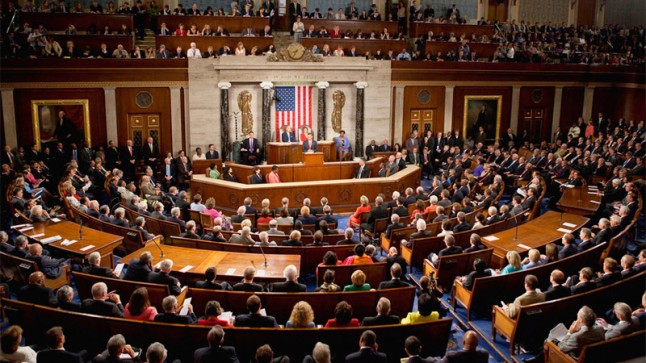
Others have commented on all of the above, but as much as all of that had something to do with it, I think we overlook one crucial factor: the rise of political theater. You have perhaps seen it on C-SPAN: A lone senator or congressional representative stands in a nearly-empty chamber and pontificates about this or that issue, knowing full well that he or she will never need to cast a deciding vote on the issue but there to register their support or opposition "for the record"--and for commercials in their campaign for reelection. The reason that Congress's approval rating is in the single digits is that nearly everyone across this country knows that Congress has largely abandoned the compromise-laden, win-some-lose-some, rough-and-tumble task of making laws and governing our nation for the far more lucrative (in both actual dollars and political capital) and far more enjoyable task of starring in a play of their own creation, funded by corporations and wealthy patrons and finally paid for by the audience, the American people, who are required to purchase season passes every April 15.

Frankly, we treat our elections as entertaining sporting events--with just as much consequence as voting for members of the baseball All Star Team. Actually, the All Star Team election is probably treated with more seriousness--at least we attempt to chose the best players based on performance! In the political arena, we just know who we like--or who we hate less--and choose them to come back on the political stage for another act. It is no surprise, then, that our next President is skilled not with statecraft or governing acumen, but with entertainment and misdirection. This is the final result of our tolerance, even encouragement of polarizing political theater--we've finally elected a clown who is selecting more clowns. Now, I know that they aren't pure clowns, pure entertainers. Many of Trump's appointments have serious government experience. Yet the media presents them as clowns. "Wow, you think HE was bad, look at THIS one!"

I know both Hillary Clinton supporters and Donald Trump supporters, and I somewhat sympathize with both. But the way to stop this never-ending political play is not to simply boo the current actors off the stage, it is rather to lower the curtain on the whole charade. Not to leave the "theatre" (cease voting and paying attention), but to refuse to watch the play. To be extremely skeptical of media hype and characterizations. To hold our senators, congressional representatives, state legislators, and even city council members and county supervisors accountable for the answer to this question: How are you addressing issues of environmental, economic, and cultural sustainability for the good of the country rather than for just your re-election? Want to get money out of politics? Refuse to attend the political play. Ask politicians what they've done, how they've had to debate, discuss, and compromise on a range of issues. In other words, judge our elected officials on how well they govern, not how well they act.

Saturday, January 03, 2015

Being Offended vs. Being Concerned

I recently ran across this image (from Sue Fitzmaurice) which sums up a number of thoughts I've been having over the past few months regarding how easily we are "offended" at things and how few times that offense is translated into meaningful action. The Internet (and, more specifically, Facebook) allows the spreading of information, images, and opinions with a few clicks. Once we've done that, we can go on about our normal day. Some of these posts and articles we pass on are written specifically to elicit such clicks--they are designed to stimulate us to pass them along.

I wonder: What if we committed to not passing along anything we aren't personally committed to doing something about? Doing something beyond passing the information along, I mean. It is easy for me to read an article and, with a few clicks, drop it into my Facebook feed for all of my friends to see and pass along. While there is some value in making people aware of instances of poverty, injustice, greed, and violence, perhaps we should see that as a first step in addressing those issues, not the last.

Something to think about in this new year.

Sunday, July 21, 2013

We're just not republican enough

I've finally figured out what the biggest problem in our country is:

We're not republican enough. 

Note that I have not capitalized the R. I'm not saying the problem is that we're not aligned enough with the policies and values of the Republican Party. Far from it! What I am saying is that many, many of us have been taught that we are part of a democracy and we act as if this is not only the way it should be, but that "the government" is taking away our God-given democratic rights. The truth is otherwise.

We do not live in a democracy. We live in a republic.

A republic, as anyone my age who passed high school Civics class can tell you, is a representative democracy. We elect people to represent us as members of the local school board, city council, or state or federal Senate or House of Representatives. We trust them to educate themselves about policy and the implications of the various laws and other policy items they vote on and then to defend those votes to their constituents. We may not agree with them one hundred percent, but we gauge their performance not on how much we agree with them but on how much they accomplish for our own good and the good of the country.

Not anymore. Now we want to vote on everything, every time, or we want our "representatives" to simply cast a vote on our behalf, just as if we were sitting in that chamber. Never mind that most of us don't know a tenth of the implications of the votes we would like taken on our behalf. Never mind that we can generally be trusted only to act in our own self-interest rather than in the interest of others. Vote my way or get out, Mr. or Mrs. Representative!

What has this brought us? Timid and reactive politicians. Witness the immigration debate. If you held a majority of House Republican's feet to the fire, most would agree that some version of the current Senate-passed immigration reform bill makes sense. But they won't support it. Why? They're afraid. Not afraid of immigrants, or of them taking jobs from others, or anything you might expect. They're afraid of being defeated in their primary races by someone more "conservative" (read: right-wing) then they are. They are afraid of not being re-elected. Not failing to be re-elected because they haven't done enough, but failing to be re-elected because their "base" constituency will be whipped into a froth and vote them out on this issue only--regardless of whether or not it makes sense.

Couple this with the obscene amount of money it takes to mount a credible campaign, which mostly relies on simplistic 30-second commercials about how awful the other candidate is and how they supported this bill or that bill, and how awful it is that they could compromise on such an important issue (whatever that issue is) and you end up with representatives who spend half their time raising money, a quarter of their time campaigning for re-election by deriding their opponents, and it is no wonder there is little time to even come up with a nuanced version of any issue, much less to foster the kind of across-the-aisle relationships that getting anything done requires.

My solution? Evaluate representatives not on how closely they aligned with your own views on various policy issues, but on how much they actually got accomplished. Did they participate in crafting and passing a more or less realistic budget? Did they reach across the aisle to collaborate with others to get a reasonably good law or policy passed? Did they reach out to ALL of their constituents (not just donors or their "base") with thoughtful discussions and defenses of their votes? Then re-elect them. If they just reacted to the latest 30 second commercial, bowed to pressure from their fellow representatives on their side of the aisle or, worse, their "leaders", vote them out.

At least, that's what I think.