Showing posts with label politics. Show all posts

Wednesday, November 30, 2016

Send in the Clowns: Political Theatre and the Current Political Climate

It has been nearly a month since Election Night and, for many who had hoped for a continuing journey along the path of social and economic progress, a continued process of stumbling along the slow, tortuous path of racial reconciliation, things have not noticeably improved. The news media, having discovered a new power source composed of the fusion of fear, anger, and hopelessness, has continued to report--in excruciating detail--of the ins and outs, the ups and downs, and the tweets and trials of our President-elect Donald Trump. Trump was the winner of the so-called "Republican clown car" primary and somehow managed to amass enough votes in enough places--or deny them to Hilary Clinton--that he is poised to be confirmed by the Electoral College as our forty-fifth President.

There have been many theories about why Trump won. Some count it as the last gasp of a dying white evangelical voting block desperate to turn back the clock to when institutional Christianity occupied the chair at the head of the American political table. Others say it was the white working-class voter who is tired of seeing his or her job outsourced to China, India, or Mexico leaving near-ghost towns across the rust belt. They want President Trump to bring back those manufacturing jobs and "Make America Great Again." Of course, there is the white supremicist fringe whose assistance with Trump's ascendancy has ripped the scab off the racial turmoil that has been at work under the surface like hot lava, exploding in killings and protests. School children are afraid of what their fellow students will say and do, now that racism has apparently become politically and socially acceptable. Yet Trump received double-digit percentages of minority votes and did particularly well among young, white, well-educated people.

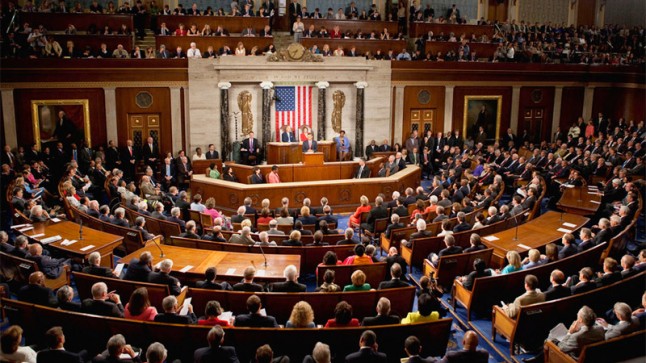
Others have commented on all of the above, but as much as all of that had something to do with it, I think we overlook one crucial factor: the rise of political theater. You have perhaps seen it on C-SPAN: A lone senator or congressional representative stands in a nearly-empty chamber and pontificates about this or that issue, knowing full well that he or she will never need to cast a deciding vote on the issue but there to register their support or opposition "for the record"--and for commercials in their campaign for reelection. The reason that Congress's approval rating is in the single digits is that nearly everyone across this country knows that Congress has largely abandoned the compromise-laden, win-some-lose-some, rough-and-tumble task of making laws and governing our nation for the far more lucrative (in both actual dollars and political capital) and far more enjoyable task of starring in a play of their own creation, funded by corporations and wealthy patrons and finally paid for by the audience, the American people, who are required to purchase season passes every April 15.

Frankly, we treat our elections as entertaining sporting events--with just as much consequence as voting for members of the baseball All Star Team. Actually, the All Star Team election is probably treated with more seriousness--at least we attempt to chose the best players based on performance! In the political arena, we just know who we like--or who we hate less--and choose them to come back on the political stage for another act. It is no surprise, then, that our next President is skilled not with statecraft or governing acumen, but with entertainment and misdirection. This is the final result of our tolerance, even encouragement of polarizing political theater--we've finally elected a clown who is selecting more clowns. Now, I know that they aren't pure clowns, pure entertainers. Many of Trump's appointments have serious government experience. Yet the media presents them as clowns. "Wow, you think HE was bad, look at THIS one!"

I know both Hillary Clinton supporters and Donald Trump supporters, and I somewhat sympathize with both. But the way to stop this never-ending political play is not to simply boo the current actors off the stage, it is rather to lower the curtain on the whole charade. Not to leave the "theatre" (cease voting and paying attention), but to refuse to watch the play. To be extremely skeptical of media hype and characterizations. To hold our senators, congressional representatives, state legislators, and even city council members and county supervisors accountable for the answer to this question: How are you addressing issues of environmental, economic, and cultural sustainability for the good of the country rather than for just your re-election? Want to get money out of politics? Refuse to attend the political play. Ask politicians what they've done, how they've had to debate, discuss, and compromise on a range of issues. In other words, judge our elected officials on how well they govern, not how well they act.

Sunday, July 21, 2013

We're just not republican enough

I've finally figured out what the biggest problem in our country is:

We're not republican enough. 

Note that I have not capitalized the R. I'm not saying the problem is that we're not aligned enough with the policies and values of the Republican Party. Far from it! What I am saying is that many, many of us have been taught that we are part of a democracy and we act as if this is not only the way it should be, but that "the government" is taking away our God-given democratic rights. The truth is otherwise.

We do not live in a democracy. We live in a republic.

A republic, as anyone my age who passed high school Civics class can tell you, is a representative democracy. We elect people to represent us as members of the local school board, city council, or state or federal Senate or House of Representatives. We trust them to educate themselves about policy and the implications of the various laws and other policy items they vote on and then to defend those votes to their constituents. We may not agree with them one hundred percent, but we gauge their performance not on how much we agree with them but on how much they accomplish for our own good and the good of the country.

Not anymore. Now we want to vote on everything, every time, or we want our "representatives" to simply cast a vote on our behalf, just as if we were sitting in that chamber. Never mind that most of us don't know a tenth of the implications of the votes we would like taken on our behalf. Never mind that we can generally be trusted only to act in our own self-interest rather than in the interest of others. Vote my way or get out, Mr. or Mrs. Representative!

What has this brought us? Timid and reactive politicians. Witness the immigration debate. If you held a majority of House Republican's feet to the fire, most would agree that some version of the current Senate-passed immigration reform bill makes sense. But they won't support it. Why? They're afraid. Not afraid of immigrants, or of them taking jobs from others, or anything you might expect. They're afraid of being defeated in their primary races by someone more "conservative" (read: right-wing) then they are. They are afraid of not being re-elected. Not failing to be re-elected because they haven't done enough, but failing to be re-elected because their "base" constituency will be whipped into a froth and vote them out on this issue only--regardless of whether or not it makes sense.

Couple this with the obscene amount of money it takes to mount a credible campaign, which mostly relies on simplistic 30-second commercials about how awful the other candidate is and how they supported this bill or that bill, and how awful it is that they could compromise on such an important issue (whatever that issue is) and you end up with representatives who spend half their time raising money, a quarter of their time campaigning for re-election by deriding their opponents, and it is no wonder there is little time to even come up with a nuanced version of any issue, much less to foster the kind of across-the-aisle relationships that getting anything done requires.

My solution? Evaluate representatives not on how closely they aligned with your own views on various policy issues, but on how much they actually got accomplished. Did they participate in crafting and passing a more or less realistic budget? Did they reach across the aisle to collaborate with others to get a reasonably good law or policy passed? Did they reach out to ALL of their constituents (not just donors or their "base") with thoughtful discussions and defenses of their votes? Then re-elect them. If they just reacted to the latest 30 second commercial, bowed to pressure from their fellow representatives on their side of the aisle or, worse, their "leaders", vote them out.

At least, that's what I think.

Monday, July 30, 2012

Money, Politics, and the Race to the Bottom

I don't usually get too political on this blog, but I just received an email, ostensibly from Vice President Joe Biden (but really from the Obama campaign) with a message that made me sit up, take notice, and sigh deeply. The message was this:

"If we don't win this election, it will be because we didn't close the spending gap when we could."

Really? Has our nation become so politicized, so polarized, so shallow, that the Presidential election will be decided solely by who has raised the most money? If that's the case, couldn't we at least do it for a worthy cause--sort of like Presidential telethon for, say, cancer. The one who raises the most money for the cause wins the election. At least then it wouldn't be literally billions of dollars spent on increasingly negative ads tearing down the other candidate and distorting his or her words and/or record. Perhaps I'm neither naive or just idealistic, but I would hope that the reason anyone loses an election is that the ideas and policies put forth by him or her at least seem better than the ideas and policies put forth by his/her opponent. Period. 

I'm pretty tired of the zero-sum political game--every policy question is framed in terms of who "wins" and who "loses." Even some TED talks are being restricted because tax policy is deemed "too political." Check this one, for instance:


This is a person who has "been there and done that" as far as starting a business, and has been extremely successful doing so. Yet his testimonial is deemed "too political" in the current environment. 


I long for a day in which people argue policy questions and come to a compromise solution that is good for the country. As long as we vote for whoever comes out on top of the fundraising smackdown, everyone loses.

Saturday, December 20, 2008

The Warren Consternation

The church and the nation are abuzz with reactions to the announcement that President-elect Barack Obama has asked Pastor Rick Warren to give the invocation at Obama's inaguration. The bulk of the reaction is negative, which is understandable given Warren's support for California's Proposition 8 and his (in my opinion) unwise statements regarding whether the United States should "take out" foreign leaders. However, Geoffrey Garrin makes a progressive case for Rick Warren in his recent Washington Post article.

I'm personally conflicted over Obama's choice of Pastor Warren. On the one hand, he has said many things with which I vehemently disagree--his support of Proposition 8 and likening gay marriage to pedophilia and polygamy (after saying that divorce was a far greater threat to the institution of marriage)--is one glaring example. Another is his backing of assassination of foreign leaders. Both positions bear a striking resemblance to the more extreme positions of the extreme religious right. I don't think either align with Jesus teachings. I also happen to know several gay couples who I believe are indeed examples of fidelity and holiness and who are likely at the very least hurt, and at the most grievously wounded over the fact that PRop 8 passed, with Warren's support.

On the other hand, there seems to be a large number of people equating Obama's invitation of Warren with a betrayal of gay rights or some sort of wholesale endorsement of Warren's views. It seems like the symbolism has completely overshadowed the potential reality. President-elect Obama hasn't even taken the oath of office yet and there are already people feeling supremely disappointed and somehow betrayed that he has made this choice. While I would likely feel differently if I were gay, our culture's obsession with symbolism over substance in general seems a disturbing trend.

A month from today, the new President Obama will take office. How about we let him make some policy decisions and then we can criticize them? Until then, give the guy a break.

Monday, September 01, 2008

Counting the Cost in an Instant Society

"Suppose one of you wants to build a tower. Will he not first sit down and estimate the cost to see if he has enough money to complete it? For if he lays the foundation and is not able to finish it, everyone who sees it will ridicule him, saying, 'This fellow began to build and was not able to finish.'" -- Luke 14:28-30

It has been several weeks since I last posted and I've been observing and thinking about where we are in both our political and ecclesiastical discourse. Today is Labor Day in the United States, a day once dedicated to "a street parade to exhibit to the public 'the strength and esprit de corps of the trade and labor organizations,' followed by a festival for the workers and their families." Not unlike the church, such labor organizations today often find themselves sidelined in the public discourse and American workers often feel increasingly on their own in a Darwinian labor market. Today, Labor Day essentially marks the end of Summer and the beginning of both the academic year in schools and the program year in churches.

There has been a great deal written and spoken in the last few years about the times we live in. In my opinion, and that of others, the twenty-first century has seen a substantial rise in the inablity of people to sacrifice now for a brighter future or even to discuss the possibility. What large sacrifice was asked of us in the wake of September 11? Was it to tighten our belts, divert domestic productivity into a wartime footing, and make other sacrifices reminiscent of World War II? No. Rather than being told to sacrifice, we were urged to shop. Shop. Shop. Shop.

We've managed to shoulder that sort of burden quite well. When we clamor for an increase in the minimum wage are we willing to pay extra so those who make those products, stock those shelves, and fill those orders can be paid more? Are we willing to buy more expensive American-made goods when we can so that companies will not be under financial pressure to ship those jobs oversees? Generally, the answer is no, we want the best thing for the least money.

More generally, do we see issues such as energy independence and sagging infrastructure as equal in gravity to World War II? Are we willing to invest both private and public funds in sources of renewable energy? Are we willing to permanently divest ourselves of huge SUVs and mammoth recreational vehicles, walk, bike, or take mass transit to our jobs, and seriously alter our lifestyle in order to wean ourselves off oil additiction? Generally the answer is no, we either want the government to do it for us, mandate it, or leave us alone. As our infrastructure crumbles, do we have it in us to make the investment of the billions of dollars it will take to repair and replace roads, bridges, and water and electrical systems our parents and grandparents built but have been neglected in the last few decades. Generally, again, the answer is no.

As we celebrate Labor Day and give thanks for the millions of hours of labor that have made this country what it is, and with just over two months until Election Day, it would be well for us all to ask ourselves whether we want to pay now, or have our children or grandchildren pay later. If our parents had been proactive when faced with gas shortages in the 1970s, perhaps we would not be where we are today with gas prices. Are we willing to look into the future and act now?

Friday, May 09, 2008

Obama Reaches Albany

This won't be long, but I did want to note that presidential candidate Barack Obama stopped off in my little town of Albany, Oregon today and I was fortunate to be one of 2,500 people in a town-hall style meeting at the Linn County Fairgrounds. I was also fortunate to be one of the many to shake his hand as he entered the speaker's area. I didn't hear too much that was new, but it was a thrill to be there and to be in contact, literally, with someone who has an excellent chance of becoming President of the United States.

Sunday, March 23, 2008

4,000 and Counting...

The news just came across the CNN web site and television that we have reached the grim milestone of 4,000 soldiers killed in Iraq. Of course, this does not count the tens of thousands of soldiers wounded nor any Iraqi casualties. Ironically, we reached that milestone mere hours after millions of Americans celebrated the Festival of the Resurrection, or Easter Day. Mere hours after I spoke of the hope that we have in being resurrection people in the face of the state-sponsored execution of Jesus, yet more death was visited upon us.

As someone who has just turned 40 years old, is engaged in a vocation of hope, but has also seen war, economic downturn, and increasing despair in the last few years, I believe that it will be important to seek out the places and people within which God is working out God's purpose and bringing the fruition God's kingdom in the world. In an excellent article posted on Episcopal Cafe, The Rev. Donald Schell writes about faith and fear in a post 9/11 age. May I be open to seeking, finding, and acting on God's will in my own life.

Tuesday, March 18, 2008

This man can speak!

Having come home from a day of interviewing Superintendent candidates for our school district and then, on the way home, briefly checking in at the church, I arrived and flipped on the TV to hear that there was a great amount of reaction to a speech given today by Presidential candidate Barack Obama on race and politics. I was not able to watch the speech when it was given. I didn't even know he was giving it. However, after returning from Evening Prayer at my church, I sat down and watched it on the Obama web site via a YouTube video, specifically this one:


I am a preacher, someone who has grown up as a white heterosexual man, and have just completed anti-racism training where so much of the history and so many of the problems Obama addressed were highlighted. I served a (largely white) church just outside of Philadelphia when I was a Curate just out of seminary. I just spent today interviewing two finalists for a Superintendent position, a white woman and a black woman, who both spoke of issues of diversity in mostly (90%) white Albany, Oregon. With all those experiences, and as a member of Obama's generation, Generation X, I was more than impressed by his speech, I was stunned and struck speechless.

All I could think of when I finished listening to the speech was "Wow. I wish there was a bishop in our church who could speak as clearly to the legacy of colonialism in the Anglican Communion, the fears and frustrations of GLBT people in our church, the despair of an increasingly marginalized mainline church, and the hopes, dreams, and experiences of liberal and conservative alike, in such a way that the polarization of the church that so much mirrors the polarization in the political arena could begin to be healed." What most impressed me about Barack Obama's speech, was that he talked about the fact that "perfecting our union" was not a zero-sum game where one person's dreams come at the expense of another person's dreams, but a way of binding ourselves together in a common purpose that allows everyone to work against the injustices, inequities, and systemic problems in the world. I'm flat out impressed.

I don't really know what else to say, so I won't say anything else, but I'm already thinking of sermon material...

Sunday, February 10, 2008

Whose conflict is this?

For at least several months now, I've been an avid reader of Dan Martins' blog "Confessions of a Carioca." Formerly a priest in the Diocese of San Joaquin, having left before the culmination of the current unpleasantness, and leaning towards the conservative side, he nonetheless has some interesting things to say about the current conflict (or "slow train wreck", as he calls it) raging in the Anglican Communion. In a recent post he writes, among other things:
I am angry with my own Baby Boomer generation, now pretty much running the Episcopal Church. That we are also running the country is also true, but too scary to contemplate--we are a generation of Peter Pans. We walk and talk like adults but we have never laid aside the self-indulgence of youth, and the mantra that we learned just as we were starting school in the 1950s, that we are special because there are so damn many of us. In the Church, our dominance is seen in the hyper-individualism by which we apprehend the Faith, and the complete sentimentalization of its content.
As a Generation Xer, who grew up seeing the families of his friends disintegrate around them, I've often thought about how similar the current strife is to a divorce and wondering whether this has as much to do with the generation "running" the church as it has to do with the issues in play. It short, I'm wondering whether, thirty years from now, we (those of us who are left) will look back and wonder why there was such a huge fight, much like we do when we look back on the fight over the "new" prayer book (now nearly thirty years old).

I'm also avidly watching the political scene, with Barack Obama, Hillary Clinton, and John McCain, and it is looking like a serious generational choice is facing the country. As far as I can tell, Obama is a GenXer, Clinton a Boomer, and McCain a Silent/Builder. It will be interesting to see who ends up in the White House, after two successive Boomers (Bill Clinton and George W. Bush). So, perhaps both church and state divides can be attributed, to generational views, at least somewhat.

Something to think about...