Friday, May 29, 2015

The Presiding Bishop and General Convention

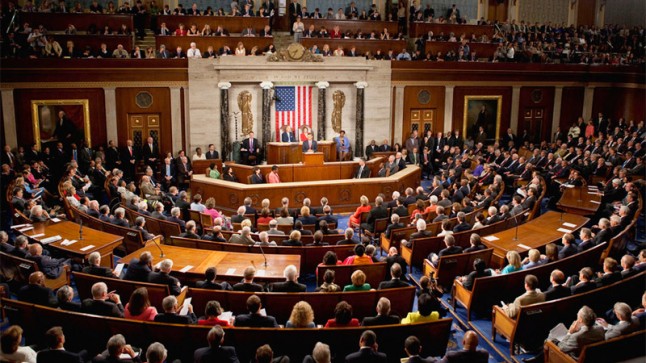
This morning I awoke to the happy news that my article with profiles of all four candidates for Presiding Bishop of The Episcopal Church has been published online and will soon appear in print in the June 6 issue of The Living Church. Having done profiles of two candidates in advance of the last election nine years ago (including one of Katherine Jefferts Schori, the eventual selection) I was pleased to be asked to do profiles of all four candidates this time.


As I noted in my article, we are in a very different era than we were in 2006--especially as far as the number and variety of information sources available to us. In 2006 the iPhone had not been announced and Twitter, Facebook, and YouTube were in their infancy. Now, in only a few clicks, one can have more than enough information about the candidates as well as the General Convention as a whole. Scott Gunn has provided an excellent summary of the reports and resolutions of General Convention in his series of articles. Others have provided their own commentary, including an excellent series from Susan Snook in her blog and via the Acts 8 Moment group she helps lead. Speaking of the Acts 8 Moment, there is also the related Memorial to the Church at the newly-created Episcopal Resurrection site.

We are now less than one month away from the 78th General Convention of the Episcopal Church and, as you can well imagine, there are fast and furious discussions going on the House of Deputies and Bishops email list, the General Convention Facebook group, and via innumerable blogs. This coming convention promises to either be a transformational moment in which The Episcopal Church institutionally breaks itself open to facilitate more effective mission and ministry in the twenty-first century or the biggest disappointment in recent memory as the energy behind the near-unanimous vote for restructuring the Episcopal Church dissipates amid the realities of parochialism and turf wars. Bishop Andy Doyle has blogged about our human tendency towards limited vision here and I hope we are able to rise above such tendencies and truly position the church for twenty-first century ministry. We shall see.

Thursday, April 23, 2015

From Sheepdog to Lead Dog to--Listening Dog?

There is an old saying that if Jesus is the Great Shepherd and human beings are the sheep, then the clergy must be--sheepdogs. We even have collars! And, sometimes we clergy can feel that way--just barking at the sheep, trying to get them to do what we believe the Shepherd is calling us to do. And, frankly, most pastors I know don't have the energy to keep up that frantic pace and most "sheep" are tired of being barked at. So what's the solution?

Shut up and let the Great Shepherd speak. Listen to Him yourself. Help others listen, too.

As we approach the upcoming General Convention in the Episcopal Church, the upcoming general election in the United States, and the constant bombardment of apocalyptic thinking continues, I find myself being sucked into the temptation to simply do things faster or do more things, or find SOMETHING that will save the institutional church (and, oh yes, my job) from what seems a constant and inevitable death spiral. Yes, I know that may be overstating things. Yes, I know that there are plenty of examples of vibrant, growing churches. But mine is not (yet!) one of them and I can only go with what I have.

As I consider all of the challenges in the church and in the world, one disturbing thing was made clear to me in our bible study of the Gospel for this coming Sunday, often called Good Shepherd Sunday:

Jesus does not care about the institutional church.

Jesus makes it clear in and around the gospel passage that the "sheep" (a.k.a. the People of God) are his responsibility. He also makes clear that the "hired hands" (pastors?) are apt to run off and abandon the sheep at the slightest sign of trouble--maybe even for the best of reasons, I'm thinking. Maybe to get help. Maybe to try something else. Maybe just out of fatigue. Whatever it is, Jesus draws a very sharp distinction between the hired shepherds and Jesus as the Great Shepherd.

But it gets worse for us institutionally-minded folks.

Jesus not only says he is THE Shepherd and that hired shepherds are not always to be trusted to stick around, but turns around and pretty much indicts the Pharisees and temple authorities for being more concerned about preserving the temple than they are about caring for their people. They have, in effect, struck a bargain with the occupying Roman (pagan) forces--we won't bother you and we'll make sure the people don't rise up in revolt if you promise not to come in and destroy the city, including the temple. This was way before Karl Marx wrote that religion was the "opiate of the masses."

In fact, it is precisely this alliance between the temple authorities and the Roman forces that ends up getting Jesus crucified! And, lo and behold, less than 40 years later the temple is destroyed along with the city, and the people are scattered. It is so tempting to get ourselves wrapped up in institutions, in survival, in preservation, and in busyness. If we do so, we are apt to miss the voice of the Great Shepherd and left standing in the middle of a parched, overgrazed patch of ground wondering where all of the other sheep went. A useful reminder.

Thursday, January 22, 2015

TREC Post: A Proposal for Reimagining General Convention

Those who have been following the goings-on in the Episcopal Church are aware that the Task Force for Reimagining the Episcopal Church (or TREC) has been hard at work for the last several years. That work culminated in a report issued last month. Unfortunately, it was long on good theology but short on specifics. So, by way of advancing the discussion forward, here are a few thoughts:

General Convention as a Unicameral Legislative Body

I like TREC's recommendation to make General Convention a unicameral legislative body rather than a bicameral legislature composed of the House of Bishops and the House of Deputies. I think the combined "house" can be called what it is--the General Convention of the Episcopal Church. I think it makes a great deal of sense to have bishops sitting with the clergy and lay deputies from their diocese and thus having a chance for ongoing dialogue. I also think a "vote by orders" where one must receive a majority votes in the order of bishop, clergy (priests and deacons) and laity makes sense for controversial and/or important items.

Reduction of General Convention Deputations from four to three people

I am in favor of reducing the number of people on a diocesan deputation to General Convention from four to three (and three alternates). I say this fully aware that, as the first alternate clergy deputy, I would likely not have gone to General Convention this summer had that system been in place. The issue of diversity has arisen, but my take is that if a diocese is not electing a sufficiently diverse slate of deputies, simply enlarging the deputation isn't going to help that. If diversity of persons in a diocesan deputation is a persistent problem in your diocese, perhaps you need to do a little diversity work--or state flat out that you are attempting to elect a diverse slate and so you do not need five middle-aged straight white men to run. Also, one would need at least a dozen deputies to fully encompass the range of diversity that one might want (racial, sexual orientation, sex, etc...). Reducing the number of deputies would allow for a smaller venue, thereby reducing costs. Having three rather than four deputies but having one's diocesan bishop at the table means that there are four seats at each diocesan table (unless a diocese has more than one bishop).

NEW: Meet in General Convention every four years, 
and in Provincial Convention the two years in between

This is something I came up with, and I think it has a lot to recommend it. The idea is that General Convention will meet every four years, rather than the current three, and that the deputies to General Convention will also be deputies to a Provincial Convention which will meet two years prior to each General Convention. In other words, people will meet every two years--once as a Provincial Convention and once as a General Convention. Deputies would need to be elected no later than 90 days prior to each Provincial Convention and would remain deputies until their successors were elected four years later prior to the next Provincial Convention. I am aware that there is currently provision for the meeting of a "Provincial Synod," but it is not explicitly tied to General Convention in the way this would be. Provinces could certainly meet more often, if they wished.

I suggest this because I think that the provincial structure is the most underutilized piece of the Episcopal Church's governance structure. I can imagine my own province, Province 8, gathering and talking about missionary endeavors on the Pacific Rim, in Navajoland, and elsewhere in the western United States and pacific regions.  Other provinces might well have similar, more local, missional concerns. Provincial Conventions could also use smaller venues, keeping costs to a minimum.

With this set up, there would be several other changes:
  • There would no longer be any "B" (Bishop) or "D" (Deputy) resolutions considered at General Convention. All resolutions would either need to arise out of the work of a CCAB (or whatever their successor bodies are called) or from a diocese or province. B or D  resolutions would be submitted to Provincial Conventions and, assuming they passed, would be forwarded on to General Convention as "C" (provincial) resolutions. This would substantially decrease the number of resolutions at General Convention and screen out duplicate or frivolous resolutions. 
  • The Presiding Bishop would serve an eight (8) year term rather than a nine (9) year term. The term would begin at the close of the electing General Convention, go through the General Convention four years later, and end at the close of the General Convention eight years later. This would be one less General Convention than the current nine year term.
  • Both General Convention and Provincial Convention could and should be reduced to one week. Beginning on Monday morning and concluding with Eucharist on Sunday. One could also have a "pre-convention" from the previous Friday to Sunday to function is a "missionary convocation" similar to what TREC envisioned General Convention turning into.
So, that's my first try at suggesting a major change and an increased role for provinces. Responses welcome.


Saturday, January 03, 2015

Being Offended vs. Being Concerned

I recently ran across this image (from Sue Fitzmaurice) which sums up a number of thoughts I've been having over the past few months regarding how easily we are "offended" at things and how few times that offense is translated into meaningful action. The Internet (and, more specifically, Facebook) allows the spreading of information, images, and opinions with a few clicks. Once we've done that, we can go on about our normal day. Some of these posts and articles we pass on are written specifically to elicit such clicks--they are designed to stimulate us to pass them along.

I wonder: What if we committed to not passing along anything we aren't personally committed to doing something about? Doing something beyond passing the information along, I mean. It is easy for me to read an article and, with a few clicks, drop it into my Facebook feed for all of my friends to see and pass along. While there is some value in making people aware of instances of poverty, injustice, greed, and violence, perhaps we should see that as a first step in addressing those issues, not the last.

Something to think about in this new year.

Friday, January 02, 2015

Of Resolutions and Transformations

As 2014 came to a close and 2015 opened, I decided to commit to three New Year's Resolutions:

1) Pray every day (Daily Office or something else).
2) Post a blog entry at least every week (to get my thoughts out).
3) De-clutter my life and home in the next six months.

A fairly good list, I'd say. I started out with the prayer goal, as I noticed that is is all too easy for me, even as a priest, to get so  busy doing what I believe God has called me to do that I forget to actually "check in" with God to see if I am still supposed to be doing what I'm doing. Prayer can be 5 minutes, 15 minutes, or 45 minutes, so I should be able to make that one.

I started out with the goal of posting a blog entry every day, but as I've missed January 1, that clearly isn't an achievable goal for me. I'm figuring that if I can manage to post at least one blog entry a week, that will be a good start towards a more regular blogging schedule.

The life and home de-cluttering is my biggest hurdle. Like many people I know, I have accumulated a TON of stuff in my life, and I have moved that stuff several times. I have too many books in my office (many of which I no longer consult, especially in the age of the Internet). I have leftover items from when my parents moved sitting in my garage (anyone need any electrical receptacles or switches?) and I just, in general, have too many things lying around my closet, bedroom, and house. So, by July 1 of this year, I hope and plan to have as much stuff out of here as possible and the rest stored neatly.

As I read the above, and as I think about Good Samaritan Episcopal Church, the church I serve, and what we will be doing in 2015, I know that any changes that I hope to lead there really start with me. I love change, I just don't like TO chnage! But obviously the way of have been doing life and ministry is not generating the transformed church that I hope and pray Good Samaritan will be. No, it isn't solely up to me, but it does start with me. If I can begin to transform my own habits, perhaps I can more effectively help the church grown and prosper.

Onward to 2015!

Friday, July 25, 2014

An Episcopal Priest and World Domination

WDS 2014 getting ready to roll!
This is the third (and last) major conference I decided to attend during my sabbatical. Actually, it is the first that I decided to attend--right after the one I attended last year. Just like last year, however, one of my recurring questions was: "How am I going to explain to my congregation why I spent sabbatical money attending a conference entitled the World Domination Summit? This is not a church conference. It isn't even a conference about the Christian faith, though it arguably is a conference about faith.

When I am asked why I am attending this conference, I generally say the same thing--I attend because it is a conference unlike any other. Most conferences are "how to" conferences. In my case, most are about how to pray more, grow your church, reach out to the "unchurched", address the spiritual needs of Millennials (the "unreached people group" of our time) or something similar. It is also what might be called an "insiders" conference. Mostly it is church people talking with church people. The World Domination Summit is different. It is a multicultural, multigenerational gathering of people from a huge variety of backgrounds--from a woman I met who repurposes used clothing as fashionable new clothing to someone I met who is beginning to think about how to use her recovery from a disease via nutrition as a business, to me, an Episcopal priest. It also isn't a "how to" as much as it is a "why do" conference.

The tag line for WDS is "living an extraordinary life in a conventional world." And there are some extraordinary people, both on stage and in the audience, most of whom likely think that they are ordinary. WDS has given me an opportunity to interact with a variety of culturally creative people who examplify the WDS core values of community, adventure, and service. Unlike many people I have met in the church, WDS doesn't just assume or value community, it celebrates community. Where else can you receive a "high five" as you come in the door for each session?
High fives entering the auditorium
Are we ever that excited about church? WDS also promotes adventure--most often by example. Hearing stories of people moving beyond their fears to accomplish some truly remarkable things (even if it is to simply live their lives by design rather than expectation) is truly inspirational. Finally, WDS invites people into service. This is far from the "live your life on your terms and make lots of money doing it" conference. It is more like a "do something good for yourself and for the world" conference. Speaker after speaker, and attendee after attendee, shared stories of how they have put themselves out there in service to others and, in doing so, found themselves living extraordinary lives.

As I did last year, I find myself reflecting on how much my faith in Jesus Christ should and does help me to live a life of courage and purpose. A life, as Michael Hyatt suggested, is designed rather than driven. I also think about how much fear and timidity often hold me back from following through on many of the ideas I have. Finally, I realize that daily life itself often conspires to distract us and divert us from doing the things we believe we are called to do.

I feel pretty confident in asserting that I was the only Episcopal priest out of 3,000 people that attended the World Domination Summit this year. I hope and pray that I can continue to work on living an uncommon and faithful life in the midst. Equally, I hope and pray that I can inspire members of the congregation I serve to do the same.

Thursday, July 24, 2014

Money as Fuel and the Why of What We Do

"In bad, unhealthy cultures, money is the goal....The great organizations, the great leaders, see money as a tool to further fuel whatever it is they are building. Of course they want financial success, because the more money they have. the more that they can protect their people....They see money as fuel, not as a destination." -- Simon Sinek
One of the great things about a sabbatical is not simply that one gets to go to a conference or seminar just because one is curious about it, but the fact that there is time to simply explore ideas. A couple of years ago, I ran across Jonathan Fields' Good Life Project, a video series of conversations with creative and interesting people. The above quote came from a recent conversation with Simon Sinek, where he talks about the power of serving others and fostering a corporate culture of safety so that people feel free to risk without reprisal if their idea or project fails.
He makes a comparison between General Electric, which was led by Jack Welch and focused on maximizing shareholder value, even to the extent of laying off people who didn't sufficiently contribute to the bottom line, and Costco, whose founder Jim Sinegal, set up a culture that pays workers well and values them. He noted that while the stock price of  GE fluctuated wildly since 1986 when  Costco went public, over the long-term one would have realized a 600% return on GE stock and a 1200% return on Costco stock if one sold each today. His point is that if you aim for wealth, you fail. If you aim for service, you win.

I've been thinking about how one might apply that to the church. In a TED talk he gave, Simon talks about the fact that people buy the "why" of what you do rather than the "what" that you are selling. In other words, people buy into the dream that is promised, not the product that is produced. We talk an awful lot about "stewardship" in the church--encouraging, almost demanding, that people give money to the church as a spiritual exercise. But in spite of that at least annual exhortation, people generally give the same amount--and it is generally anywhere from 1 to 2 percent of their income rather than the 10 percent tithe that is the "minimum standard of giving" in the Episcopal Church. Why? I suspect it is because we focus on all of the "products" (programs, worship, etc...) we are producing and not on why we are doing what we are doing. What is the dream into which we are inviting people to literally buy? If it is "keep the clergy employed, the lights on, and the services going," that isn't very compelling.

If, however, Good Samaritan Episcopal Church, and other churches, can make a compelling case for why we do what we do, and can care for people to such an extent that they will feel safe venturing out in faith, trust will naturally be built and presumably people will be willing to extend themselves both financially and physically in service to that dream. It then ceases to be about money and becomes a question of whether we have enough "fuel" to do the things that God has called us to do. Just like fuel for a car, everyone knows that the church needs money in order to do the things that God has called us to do, even in order to survive to do those things. Like a car, however, the question of where we are going with the full tank of gas that we have is an important one, especially if there is an expectation that our tank will be repeatedly refilled. People who give to churches rightly expect to know where the church is going and what the church is doing. However, they want to know even more what the dream is--what is the vision of the future toward which we aspire? That is the task before the Vestry and the clergy in the coming months and years: to define the dream.

Sunday, July 20, 2014

Reflections on Returning and Retreating

Those who have been following this blog know that I am currently on a two month Sabbatical. I've previously written on my sojourn on the "Holy Hill" at Virginia Theological Seminary for the eFormation conference and my brief visit to my parents' new (to them) house in North Carolina. Following my return from that trip, I had about almost two weeks at home, doing the usual around-the-house stuff. We also ended up with a new (to us) car, since it was increasingly clear that our beloved green van was reaching the end of its life. It was a little strange having just returned from a conference all about parish ministry and how we can and should use electronic media to help form and inform members of our parishes—and then be unable to actually implement the ideas for nearly two months! I doubt the ideas will leave me, but I’m used to being right back in the thick of parish ministry. Being back at home with nothing but rest (and to-do lists, of course) to do is an odd feeling indeed. It was good to have some time to be at home, as one of my Sabbatical goals is rest and reconnecting with family. 

After my brief time at home, it was time for the Ignation Spirituality Retreat at Mt. Calvary Monastery and Guest House in Santa Barbara. I heartily recommend this lovely oasis in the hills of Santa Barbara. We had wonderful weather (mid-70s) all week and the hospitality was outstanding. All of this was an excellent backdrop for our retreat. The retreat was entitled "The Feast: The Spirit of the Lord is Upon You! From Annunciation to Mission."It was based on Ignation spirituality, where we insert ourselves into the biblical narrative and reflect on what that narrative means for us in our own discipleship and apostleship (sending out). It is the first time that I have been on more than a weekend retreat since I was ordained nearly twenty years ago, and it was good to have some time that was specifically dedicated to sitting, praying, and reflecting on life and ministry. It was also good to have the guidance of the retreat's facilitiator, The Rev. Dr. Joseph Duggan, a spiritual director and priest in the Diocese of Northern California and, of more immediate impact to me, husband of The Rev. Stefani Schatz, a long-time friend. 

My reflections from my time there would be both too long and too personal for a public blog. Suffice it to say that my time there followed the theme of "letting go" that has become the theme of my Sabbatical. Most of the retreats I have attended have been full of programming and with minimal free time or “self-directed” time. This was the complete opposite. There was no programming, speaker, or seminars. There was an outline of scripture and reflection questions for each half-day (morning and afternoon) and an opportunity for one-on-one meetings with our retreat leader, but we were commended to observe the “lesser silence” in the morning and through noonday and the “greater silence” in the night, leaving just the afternoon and evening for any sort of social interaction between me and my four fellow retreat members. Now, I may be an introvert and an unstructured (perceiving) personality on the MBTI, but nearly five days of mostly silence and huge chunks of time for rest and reflection is something to which I had a hard time adjusting!growing awareness that what I may be called upon to be is a builder of spiritual infrastructure. 

During the retreat I read an article about Silicon Valley’s increasing fascination with, and fixation on, the newest thing and the last “app” to the exclusion of what enables that innovation to occur in the first place—semiconductors, chips, routers, etc… It occurred to me that this is also going on in the church—we strive for the latest and greatest thing (program, book, worship style, etc…) and sometimes neglect the basic infrastructure. This is especially true in this time of rapid change and transition. We alternate between frantically trying to keep pace with the latest spiritual trends and sitting in despair that we are unable to do so. Perhaps an emphasis on “spiritual infrastructure”—prayer, study, and intentional action—might be a good way of re-framing how we do and are church.

Wednesday, June 11, 2014

eFormation on the Holy Hill, Part II

Day two (Tuesday) of eFormation primarily focused, for me, on video production. I took a seminar series on video pre-production, production, and post-production and we talked about how that might be used in a parish setting. Useful information, though i was thinking it could have been done in two sessions versus three. I also attended a "designing adult education in a twenty-first century church" or something similar. We talked a lot about how to do adult Christian formation with people who work or commute long hours or otherwise simply do not have an hour or two a week to spend. Perhaps the best seminar was one on "curating" information on Christian formation. Before this, my assumption is that people could simply look up whatever they wanted online. As was pointed out, however, there is so much information available that it is very useful to people for a church to compile a page of trusted sources for Christian formation. So, I'll be putting a web page together on our church web site.

Wednesday was essentially a wrap-up day focusing on what people had learned about eFormation and looking forward to implimenting what we had learned. During lunch, we participated in a live-taping of "Easter People" the VTS Key Hall webcast.

Monday, June 02, 2014

eFormation on the Holy Hill


Old Chapel garden--where the altar once stood
For the first time in almost decade, I have returned to Virginia Theological Seminary (VTS), my alma mater. I must say, it is a little strange wandering around buildings that hold so many memories from 20 years ago. The Addison Academic Center, brand new when I was here, is nearly two decades old. The old chapel is gone, consumed by fire several years ago and now a prayer garden. The new chapel is rising. Key Hall, once a classroom and storage space, is now the bright, airy location of the Center for the Ministry of Teaching. Can't believe it has been nearly 20 years since I left this place.

One thing that has not changed is the seminary's commitment to teaching and learning. It has been a privilege to be back here for a conference on "eFormation"--highlighting how electronic media have changed how we are formed as disciples of Jesus and how we help form others. Like any conference, there is far more available than one can hope to take in. I focused my attention on only a few. On Monday, I attended "Stealth Christian Formation" with Tim Schenck (pronounced skank--make of that what you will). Tim talked about how to make everything we do in church a formation opportunity--as exemplified by the phenomenal success of Lent Madness, which he launched several years ago.

The next seminar was "Getting Started with Online Christian Formation" with Chris Yaw. I decided to take this class because Good Samaritan is a subscriber to ChurchNext, Chris' online video educational site.  He had some good reflections on this very early venture into helping churches set up online schools for members new and old. It seems like a great way to both connect with people who may never darken the doors of our church (not exactly a great image, actually...) and to teach and form people within our church without having to make things up from scratch--which many clergy end up doing because they don't know what resources are there for things like Confirmation classes. It was a good presentation and motivated me to actually start our own online school through our parish web site.

Finally, I ended up attending a "Curating Faith Formation: Digital Content for Bible, Theology, Spirituality, and More" with Sharon Ely Pearson and John Roberto. This was a fascinating seminar highlighting not only the HUGE array of web sites and materials available, but the critical task of curating--filtering, if you will--those resources for one's own congregation via the church web site. Oddly, it never occurred to me that people would look on our web site for links to help them study the bible, raise their children with Christian values, or deal with the challenges of growing older. I figured that it was out there and they would just find it. As was pointed out, however, Google is notoriously unselective when presenting resources, so some human curating is both necessary and valuable.

So, all in all, a great day of learning. Also, a great night in the new(ish) "pub on campus--named "1823" for the year the seminary was founded.

Saturday, May 31, 2014

On Sabbatical: Back to Blogging

As of tomorrow morning, I will officially be on Sabbatical. A Sabbatical, for those not familiar with previous sabbatical, I'll be blogging fairly regularly.
The cleanest the office has been in years...
the term, is a lengthy period of rest, refreshment, and re-formation afforded to clergy and professors. Clergy Sabbaticals are not intended simply as a long period of rest and relaxation, but a time to step out of day-to-day church life, have some new experiences, learn some new things, and return to church rested, refreshed, and bearing new ideas and/or new perspectives that will assist in both congregational and personal ministry. As I did in my

My hopes and plans for this Sabbatical are threefold:
  1. Technology. I'm really eager to explore the world of blogging, video blogging, and social media in general more deeply. It seems like this is an emerging evangelistic medium and, as I am not a big fan of door-to-door evangelism, it also seems like it would be a great option and opportunity for me. I'll be attending the eFormation conference at Virginia Theological Seminary (my alma mater!) to get a taste of the possibilities. I'm also hoping to take some seminars on video production.
  2. Spirituality. One of the great ironies of professional pastoral ministry is that running the "business" of the church can often crown out time for deepening one's spiritual life. Since my last Sabbatical, I've been intrigued by Benedictine spirituality and will be doing some research on, and experimentation with, that. I'm also going to be attending a retreat at Mount Calvary Benedictine Monastery in Santa Barbara.
  3. Family and Household. The world runs really fast, and this is also true of pastoral ministry. I'm hoping and planning on doing a lot more focusing on my family and taking time to be with them. I'm also hoping to get some long-postponed projects completed around the Rectory, so we can more fully live here and make it completely our own.
That's pretty much it for now. No church in the morning for me--but lots of church this week!

Saturday, December 07, 2013

Freedom and Noblesse Obliege

I recently had a brief Facebook conversation with an old friend in response to a Fox News opinion article with the headline: School bans Christmas trees, the colors read and green. I gave a somewhat snarky reply that neither trees nor the colors red and green were actually Christian. Her more gracious reply was that it was a matter of freedom and that people's rights to practice their religion were being infringed in order not to offend those of other faiths. The article concludes:
"So this is what it’s come to, America. You’ve got college-educated teacher terrified to put a toy elf on the shelf because she might get sued by the ACLU or some other left wing anti-Christmas group."
Now I will grant that adults and children should be able to celebrate whatever religious holiday they choose to without fear of peer pressure or reprisal. People should be able to discuss and celebrate the holidays of Christmas (Christians), Hanukkah (Jews), Kwanzaa (African-Americans), Bodhi Day. (Buddhists), or any other religious holiday in December. But I do think that we white Anglo-Saxon Protestants need to be a little bit careful of crying "persecution" every time our expressions of faith are limited or, let's be honest, our dominant-culture privilege is infringed upon.

I was pleased to be able to attend a a local production of Fiddler on the Roof and was struck, not for the first time, by what real persecution looks like. The story is set in 1905 in Tsarist Russia and while the focus is on the erosion of tradition" in Tevye's family and his small village of Anatevka, the wider story is the encroachment of the outside world--specifically the eviction of Jews from their villages on the instructions of Tsar Nicholas II. As I sat there in a warm, dry, safe theater paid for by taxpayer money watching this show that I had paid money for without a second thought, it came to me afresh how fortunate I am as a white, heterosexual, employed, upper-middle class Protestant Christian American. I own what I own and do not need to worry about its being taken away from me. I had eaten a good meal and was not worried about from where my next meal would come. I could get in my car and be reasonably sure that it will take me home quickly and without incident. I was unlikely to be stopped by law enforcement on the way home and asked why I am in that wealthy community (Saratoga, CA). I have many freedoms that others can only dream of.

This is why I am very reluctant to claim persecution and wary when I see others in my similar situation do so. Yes, we need to guard against government dictating what we can or cannot do--because the ultimate result of unchecked government power is what happened to Tevye and his neighbors--and later to over 6 million Jews in the Holocaust. We also need to be wary of those who simply decry money and corporations, because the revolution such cries sparked in Russia resulted in communism. But when most of my contemporaries cry "persecution" they are often instead railing against the diminished white privilege (even unconsciously) which is a hallmark of the increasingly multicultural nature of this country. Yes, other races, religious traditions, sexual minorities, and people long on the margins of society are claiming an increasing share of what used to be power reserved to the majority population--a majority that is decreasing by the hour. Politically, we are seeing congressional districts redrawn to protect this diminishing privilege and seeing an increasingly inequitable dispersion of wealth. Culturally, we are feeling the death-throes of a culture in which there will be no dominant culture any longer. I also think of Nelson Mandella, who died this week, as he struggled against the dominant (though numerically minority) culture in South Africa. Such struggles make complaints about "Happy Holidays" instead of "Merry Christmas" seem foolish.

My point in this lengthy post is that rather than whining about persecution and fighting an increasingly desperate battle against multiculturalism, those of us with power should instead shoulder the ancient notion of noblesse obliege--the notion that those with power have an obligation to empower those with less power and to use our power for justice rather than subjugation. As Christians, we of all people should be aware of the dangers of temporal power and the power of love and sacrifice to triumph over the world. As we move towards Christmas, may we take seriously Jesus words:
"From everyone who has been given much, much will be demanded; and from the one who has been entrusted with much, much more will be asked." (Luke 12:48b)

Thursday, August 15, 2013

4 Years Later: Nothing Changes in TEC Advertising (UPDATE: Except the responsiveness!)

UPDATE: If you click on the newest Episcopal Church advertising link, you now get the following rather than the ads:
Many thanks to those of you who have given us constructive comments on the billboard and postcard suggestions we had posted.  We agree that the concept needs more work, and we are going back to the drawing board with your ideas in mind.  We sincerely appreciate your feedback and encourage you to keep sharing your ideas and, when appropriate, your criticisms.  We take them all seriously. 
Well put and a good response--something that was not in evidence four years ago. So, things DO change! Well done, Episcopal Church Center staff!

----------------------------------
As a prologue to this post, I want to say first of all that I love the Episcopal Church. I am an Episcopal priest because I love the combination of Word and Sacrament, the "big tent" theology that welcomes everyone, and the conviction that the love of God in Christ is transformational in people's lives. I'm one of a diminishing number of so-called "cradle Episcopalians" and a member of likely an even more rare group: Generation X cradle Episcopalians. I've spent nearly 20 years in the ordained ministry and with everything that is wonderful about the church there is one thing that continually amazes me about it:

How many times we shoot ourselves in the foot. Repeatedly.

Almost four years ago, I wrote a blog post critical of the Episcopal Church's new advertising campaign which came up with this attention-grabbing ad (sarcasm) which they paid a significant amount of money to put as a full-page ad in USA Today (see above). Not only was I underwhelmed and lamented the waste of time and money that this represented, but I also recalled the not very helpful fact that if any congregation wanted to use this ad and put their own church's name on it they were invited to "email us [Episcopal Church Center] and we will create a personalized ad for you." Had no one at Episcopal Church Center heard of Photoshop? Could we not be trusted to take the artwork provided and personalize it? Apparently not.

In the midst of this I was also notified by legal council at Episcopal Church center that I was not permitted to use the Episcopal Church shield unless I obeyed strict guidelines on its use. I could not put it on t-shirts, coffee mugs, and other items in my Café Press shop. I was informed of this after I logged into my shop and found the images had been blocked and then had to ask why they were blocked. I haven't had time with my day job as parish priest to pursue the matter further. But apparently my efforts to advertise the Episcopal Church were not received in the spirit with which I offered them. Clearly no one was permitted to deviate from official materials.

In my blog post, I contrasted the USA Today ad with two ads that my colleague Frank Logue, then a parish priest and now Canon to the Ordinary for the Diocese of Georgia, put together in short order from the suggestions of two colleagues via Facebook:

The ad to the left is image-based rather than text-based, it has an attention-grabbing headline, it shows a picture of an actual ministry of the church with actual people. It shows a great view of a lovely worship space (of which the Episcopal Church has more than its fair share). Finally, it invites people to worship and service in the Episcopal Church--two things we do very well. What it does not do is explain all of the reasons that you really should give the Episcopal Church a try, in excruciating detail.

The other ad highlighted the multicultural nature of the Episcopal Church, gave a brief dig at the Republican Party, but otherwise pretty much said "we're a diverse, multi-age, multi-ethnic church" without using any of those words. Brilliant, and probably took him about an hour on his computer.

Fast forward four years and the Episcopal Church has now come up with brand new, cutting-edge, advertising materials that feature several phrases on a stained glass background, such as the ad:

Another clergy colleague has already voiced his opinion via an excellent blog post. My opinion is that we've progressed from wordy two-color bullet point ads in 2009 to less wordy, more snarky, and still image-less ads in 2013. Given the background graphics, this is something that many of my colleagues and I could have done in 15 minutes on a computer, if we had wanted to sound like a mother scolding her grandchildren who never write, never call, and just don't visit often enough. I won't inflict the others on you, but suffice it to say that they ads reinforce the stereotype that we're a bunch of old, rich, cranky white people who can't understand why our children and grandchildren don't come to church anymore. As someone on Facebook said in response: "These new ads somehow blend hipster elitism and stick-in-the-mud traditionalism into the same gooey mess."

Contrast that with the materials from the diocese of Ohio, which feature ads like this: 


Note that this does not conform to the national church's style standards (doesn't have the new shaded shield), but it is way more effective than what came out of the national church.

I would like ads worthy of the wonderful church that this is. I would like things like the advertising materials that the church posted but without the text, so that people could add pictures and their own clever text to the background. Perhaps even a repository where people can upload their own ad ideas. It is time to let go of the corporate command-and-control and bad 1980s style advertising and get into the twenty-first century where anyone with a computer and a basic image-editing program can do this kind of thing with a few resources at his or her disposal. And without offending anyone.

Give us the tools. Get out of the way. And talk to folks who don't currently go to church before you do this again. Please.

Friday, August 02, 2013

Relief and (Re-) Development: Desparation and Dependency

Good intentions without action don't accomplish much, but what action is needed?.
I recently finished reading the book Toxic Charity: How Churches and Charities Hurt Those They Help (And How to Reverse It) by Robert Lupton. Perhaps the best part of the book is this one:
...in 2001, six years after Hurricane Katrina struck New Orleans and long after the city should have shifted to long-term development projects, churches and mission organizations still "market" the crisis and volunteers continue to flow into the city by the thousands, distributing free food and clothing to "victims." When relief does not transition to development in a timely way, compassion becomes toxic.
He quotes Roger Sandberg, former Haiti country director of Medair, in defining a progression from relief to development:
First stop, relief. Relief work occurs during and immediately following an emergency and includes not only life-saving interventions but also the alleviation of suffering.
Second stop, rehabilitation. Rehabilitation follows and overlaps with the relief phase. Rehabilitative work increases the capacity of a local community, enabling them to better respond to future crises. Rehabilitation also seeks to promote projects that restore services or livelihoods to a preexisting or improved level.
Third stop, development. Development interventions follow and overlap relief and rehabilitation phases. Development work is long term. It seeks to improve the standard of living for a population over many years or decades. In the best-case scenario, relief and rehabilitation inverventions are done with long-term development in mind....Very roughly, we might say that relief, rehabilitation, and development phases respectively last months, years, and decades.
This particular distinction between relief, rehabilitation, and development has been on my mind in the last several months in three areas of my life: local, national, and international.

On a local level, as a parish priest I respond to urgent crises through small grants from my discretionary fund--a fund set up by the church to be used at my discretion (hence the name) to address needs as they arise. Most of the time, it is used to do things like provide two quarts of oil and a tank of gas to needy folks heading for San Francisco or a hotel room for a mother and her kids fleeing an abusive husband/father. This is all good to do, but leaves me feeling dissatisfied because I know that I'm simply doing relief work, not solving the underlying problems. It also frustrates and angers me when I see an unending procession of need, sometimes event the same people over and over again. I have the dual feeling of being angry at being taken advantage of and yet ashamed of that anger because i know that ninety-five percent of thse folks have few other options.

On a national level, I've watched with increasing frustration as our national debate regarding cuts to the Supplimental Nutritional Assistance Program (SNAP, formerly Food Stamps) between, if you believe the two sides, the heartless, cold-blooded Republicans and the bleeding-heart, dependency-fostering Democrats. Below the partisan posturing is a disagreement about whether (and when) relief of suffering should stop and whether (and when) government should be in the business of rehabilitation and development to help people lift themselves out of poverty and need. There seems to be little discussion of how the government can facilitate increasing the capacity of people to respond to future crises--just whether we should still send checks or not. Additionally, the notion of separating people into "givers" and "takers" strikes me as a profoundly unhelpful way of wrestsling with the need to go beyond relief to rehabilitation and development. Throwing a drowning person a life-ring will not foster dependency. Jumping in and trying to hold them up means that both of you end up drowning.

On an international level, several months ago I spent a week in Haiti. That country is perhaps the poster child (yes, I appreciate the irony of the phrase) for perpetual relief verging on the toxic. Literally billions of dollars have been spent there, often with major strings attached in the name of accountability. At the parish I serve, St. Edward's, we are a part of consortium of churches and a school that have a relationship with St. Patrick's Church and School in LaCorbe, Haiti. Having had a relationship with people there for many years, we are beginning to discuss how to move from continually addressing immediate needs to building the capacity for the community to begin to provide for themselves. There is certainly a tension between what they perceive as their immediate needs and what we hope for as far as long term rehabilitation and development. Part of the challenge is that we have the luxury of taking the long view. A good example is that there is a need for a power source at this fairly remote chruch and school. As enlightened, developed-world folks, we would prefer to set up a small solar installation that would then be self-sustaining. However, our partner in Haiti would like a gasoline generator so that he could haul it around and use it for a variety of congregations and schools. Both make sense in their own way. On the one hand, we don't want to do what so many NGOs have done in Haiti and impose our own will on them. On the other, we don't really want to perpetuate a reliance on expensive fossel fruels. Difficult decisions.

I have no easy answers to any of this, but it does strike me that we need to be having these sorts of conversations at all levels of government and within our churches. Just writing a check, as much as it helps in the short-term, stops at relief without moving beyond that. If we can get to the point of true partnership where we help people to get and stay on their feet, perhaps we can move beyond the gridlock in both government and society.

Sunday, July 21, 2013

We're just not republican enough

I've finally figured out what the biggest problem in our country is:

We're not republican enough. 

Note that I have not capitalized the R. I'm not saying the problem is that we're not aligned enough with the policies and values of the Republican Party. Far from it! What I am saying is that many, many of us have been taught that we are part of a democracy and we act as if this is not only the way it should be, but that "the government" is taking away our God-given democratic rights. The truth is otherwise.

We do not live in a democracy. We live in a republic.

A republic, as anyone my age who passed high school Civics class can tell you, is a representative democracy. We elect people to represent us as members of the local school board, city council, or state or federal Senate or House of Representatives. We trust them to educate themselves about policy and the implications of the various laws and other policy items they vote on and then to defend those votes to their constituents. We may not agree with them one hundred percent, but we gauge their performance not on how much we agree with them but on how much they accomplish for our own good and the good of the country.

Not anymore. Now we want to vote on everything, every time, or we want our "representatives" to simply cast a vote on our behalf, just as if we were sitting in that chamber. Never mind that most of us don't know a tenth of the implications of the votes we would like taken on our behalf. Never mind that we can generally be trusted only to act in our own self-interest rather than in the interest of others. Vote my way or get out, Mr. or Mrs. Representative!

What has this brought us? Timid and reactive politicians. Witness the immigration debate. If you held a majority of House Republican's feet to the fire, most would agree that some version of the current Senate-passed immigration reform bill makes sense. But they won't support it. Why? They're afraid. Not afraid of immigrants, or of them taking jobs from others, or anything you might expect. They're afraid of being defeated in their primary races by someone more "conservative" (read: right-wing) then they are. They are afraid of not being re-elected. Not failing to be re-elected because they haven't done enough, but failing to be re-elected because their "base" constituency will be whipped into a froth and vote them out on this issue only--regardless of whether or not it makes sense.

Couple this with the obscene amount of money it takes to mount a credible campaign, which mostly relies on simplistic 30-second commercials about how awful the other candidate is and how they supported this bill or that bill, and how awful it is that they could compromise on such an important issue (whatever that issue is) and you end up with representatives who spend half their time raising money, a quarter of their time campaigning for re-election by deriding their opponents, and it is no wonder there is little time to even come up with a nuanced version of any issue, much less to foster the kind of across-the-aisle relationships that getting anything done requires.

My solution? Evaluate representatives not on how closely they aligned with your own views on various policy issues, but on how much they actually got accomplished. Did they participate in crafting and passing a more or less realistic budget? Did they reach across the aisle to collaborate with others to get a reasonably good law or policy passed? Did they reach out to ALL of their constituents (not just donors or their "base") with thoughtful discussions and defenses of their votes? Then re-elect them. If they just reacted to the latest 30 second commercial, bowed to pressure from their fellow representatives on their side of the aisle or, worse, their "leaders", vote them out.

At least, that's what I think.

Saturday, July 06, 2013

World Domination Summit, First Cut

This post represents some initial impressions after being at one of the most remarkable conferences I've ever attended. After an opening word and concert Friday night at the Oregon Zoo, we had several plenary speakers over two days at the Arlene Schnitzer Concert Hall in downtown Portland, Oregon and many afternoon seminars from which to choose. Any number of people have asked me why I went and what I wanted to get out of this. As a first-time WDSer, I have a confession to make.

I have no idea.

WDS is so hard to describe. The best tag line I've run across is "living remarkable lives in a conventional world." WDS seems to be the quintessential "out of the box" conference---in other words, if you are (or want to be) out of the box, this is the conference for you. I'm still processing all of the things I've learned, but one big thing I've learned: I have heard more about being your true self, following your dreams, and truly being community in 48 hours here than in many years of church conferences. 

As I've explained it, most of the conferences I attend tend to be what might be called "industry" conferences--talking about how to grow your church, reach out into the neighborhood, preach better, study the Bible, etc.... They're pretty much designed to appeal the the clergy that attend them. They also have to be relatively inexpensive, all the better to fit into Continuing Education budgets. But what most of them end up as are low-budget discussions of Jesus, the church, arcane Biblical truths, or other "shop talk." That isn't always true, and I've been to my share of great conferences, but there's always sort of an implicit "us/them" thing going on. "How do we get them to come to us?" "How do we get us (in the church) to go to them?" There really isn't a realization that people can lead perfectly good, even remarkable, lives without being a disciple of Jesus, much less a church-goer.

As I noted above, I'm still processing all of my learnings, and I'll no doubt have more to say. I'm just glad that I came. I hope my life is more remarkable because of it and I'm going to try and make it so.

Stage at WDS 2013

Sunday, October 28, 2012

Bad Theology and Acts of God

“Even when life begins in that horrible situation of rape, that is something that God intended to happen." -- Richard Mourdock

No doubt you have read or heard about the quote above and the firestorm that has followed it. Among a great many other comments, it provoked this blog post from Susan Russell. The blog post itself is about the mistake of writing our own theological convictions into law in a secular democracy. I'm with Susan on that one--if we are against a country instituting Sharia law as their civil law, why are so many of the same people eager to write evangelical Christian theology into law in this country? Yes, we do legislate morality--from the regulations we support to the tax breaks we give--but it should be a morality common to the vast majority of citizens, not the interpretation of a shrinking faction of them.

But that isn't what I want to blog about. I want to talk about the flawed theology the under-girds Mr. Mourdock's statement: the idea that everything that happens to us is under God's control. If it happened, then God intended it to happen.

This theology is most often expressed, unhelpfully, in the wake of a tragedy. I've especially heard it after the untimely death of a loved one. Phrases like "God must have needed him in heaven" or "God meant for this to happen" or "God must have some reason for doing this" are attempts to make sense of the senseless--and to hang that effort on the belief that God controls each and every thing that happens in this world. Even insurance companies use the term "act of God" to describe a natural disaster.

Books can and have been written about why bad things happen to good people. The point is that ever since the Garden of Eden, there have been two things that blocked God's will from being done in the world: human sin and random chance. If one accepts the Garden of Eden story even as an allegory, the question comes up: Did God intend for Eve to eat the apple? No, he specifically told her not to do so. Why did he even put the forbidden tree in the garden? Because following God's will without a choice is not discipleship, it is slavery. The Bible is filled with people who were asked to make choices about their lives and the results of those choices.

It is also the case that the world functions via natural laws--tidal waves, hurricanes, earthquakes, storms and other natural phenomena don't ask whether or not there are people living in that place--the event happens regardless of whether there are two or two million people living there. Along side natural law is random chance--in other words, stuff happens. God may be omnipotent, omnipresent, and omniscient, but God has chosen not to control everything that happens in the world. Just as human beings have free choice about whether they follow God's direction or not, the world is also not subject to God's direction. Evil exists. Disease happens. The world is a fallen, imperfect place. It is not the Kingdom of God.

All of this provides, or should provide a sense of perspective to the Christian. Whoever ends up winning the election in a little more than a week or so, God will still be God and the world will still have the problems and challenges that it has. The way we deal with those issues as people of faith is probably more important than even this issues themselves. God does not cause tragedy, but God does help us deal with tragedy. And that is an act of God.

Monday, July 30, 2012

Money, Politics, and the Race to the Bottom

I don't usually get too political on this blog, but I just received an email, ostensibly from Vice President Joe Biden (but really from the Obama campaign) with a message that made me sit up, take notice, and sigh deeply. The message was this:

"If we don't win this election, it will be because we didn't close the spending gap when we could."

Really? Has our nation become so politicized, so polarized, so shallow, that the Presidential election will be decided solely by who has raised the most money? If that's the case, couldn't we at least do it for a worthy cause--sort of like Presidential telethon for, say, cancer. The one who raises the most money for the cause wins the election. At least then it wouldn't be literally billions of dollars spent on increasingly negative ads tearing down the other candidate and distorting his or her words and/or record. Perhaps I'm neither naive or just idealistic, but I would hope that the reason anyone loses an election is that the ideas and policies put forth by him or her at least seem better than the ideas and policies put forth by his/her opponent. Period. 

I'm pretty tired of the zero-sum political game--every policy question is framed in terms of who "wins" and who "loses." Even some TED talks are being restricted because tax policy is deemed "too political." Check this one, for instance:


This is a person who has "been there and done that" as far as starting a business, and has been extremely successful doing so. Yet his testimonial is deemed "too political" in the current environment. 


I long for a day in which people argue policy questions and come to a compromise solution that is good for the country. As long as we vote for whoever comes out on top of the fundraising smackdown, everyone loses.

Thursday, July 26, 2012

The Sound of Silents, Volume II

I may be odd in this way (I certainly am in other ways!), but generational identity fascinates me. The idea that we are formed by the culture in which we grew up, by the events we lived through, even by the number of people who grew up alongside us, is interesting in both personal and professional ways. A new blog entry entitled Generation X Doesn't Want to Hear It (warning, profanity) essentially expresses what most my fellow Generation Xers have known: we are destined to be forgotten. Either we will be the bridge between huge generations (Boomers and Millennials) or we will be water under the bridge. In many ways, we are the forgotten especially now.  The youngest of us have broken 30 years old and most of us have topped 40 and are no longer the "cool youth demographic" that is often defined as under 35 years old, especially in the church.

We are similar, in many ways, to the generation known as the Silent Generation (born 1925 to 1942). My parents are the youngest members of that generation, born between the Great Depression and World War II and coming of age in the 1950s when underneath the post-war celebration, the tectonic plates of cultural change were beginning to shift and cause the great cultural earthquake of the 1960s. GenXers were born largely from the Silent Generation, born during the sixties with little memory of the turmoil or during the seventies when things were sorting themselves out after the tumult and things like gas lines and pop music were primary memories.

So, what can we learn from (gasp!) our parents in the Silent Generation? Well, first, that they (like we) are/were a diverse lot--George Carlin, Peter, Paul and Mary, Newt Gingrich, Harrison Ford, and John McCain are (or were) of this generation. Wikipedia notes that:
In their book Generations, William Strauss and Neil Howe define this [Silent] generation as an Artist/Adaptive generation. An Artist (or Adaptive) generation is born during a Crisis, spends its rising adult years in a new High, spends midlife in an Awakening, and spends old age in an Unraveling. Artistic leaders have been advocates of fairness and the politics of inclusion, irrepressible in the wake of failure.
If Generation X is similar, we were born during the cultural and economic crisis of the 1960s and 1970s, came of age in the 1980s and 1990s while watching Silicon Valley and technology transform our lives and then saw the dot-com boom and bust and, during our (mostly young-) adulthood, the events of 9/11. By the pattern of the Silents, we are in a state of Awakening and they are in a state of Unraveling.  The legacy of the Silent Generation may be that they kept the country stable long enough for the Boomers to come of age and for the Generation Xers to survive our childhoods.

The other lesson and legacy of our Silent Generation parents is that we inherited the "adaptive" gifts and skill set--we appear to be able to adjust rapidly to changing realities, a skill forged during the technological revolution and the ups and downs of economic and political life. We're not quite the "fix it myself" folks that the Silent Generation are--many of them grew up on farms and learned to make do with the physical resources they had where as we grew up in suburbia and learned to make do with the emotional and mental resources we had.

This is only the beginning of some time I'd love to spend reflecting on lessons that I any my fellow GenXers can learn from those we are generationally (and sometimes literally) our parents. We'll see where that leads!

Thursday, April 19, 2012

From Assembly Line to Artisan

I am a huge fan of RSA, and more specifically the RSAnimate video series. Recently, I ran across a great video from 2010 discussing the huge challenges facing education in the twenty-first century. Check it out here:


I think the author, Sir Ken Robinson, makes some excellent points. I began formal schooling nearly 40 years ago. When I began, we did do a lot of playing, interacting with the world, and (yes) learning in the process. Fairly quickly, however, we ended up in a classroom with rows of desks, teachers in front of blackboards, heavy textbooks which we were not permitted to write in, and, increasingly, being taught subjects we had no interest in and many of which seem to have no practical application. So, now my children are in school and what fantastic progress has been made in almost 40 years? Well, there is more "group work" and children sitting in "pods" of four to six children (which has its own problems for those of us who are introverts, as this video points out). There certainly are more computers, smart boards, and other technology. White boards with pens have replaced blackboards with chalk. There is a lot more standardized testing.

Aside from all of that, kids are still being stuffed into classrooms with teachers in front of white boards, taught subjects of questionable utility from heavy textbooks (which they're still prohibited from writing in) and penalized if they don't find this as scintillating as conversations with one another or staring out the window, of which there are increasingly few. The comparison to a factory churning out groups of standardized students made in the video is painfully apt. We appear to be doing almost exactly the same teaching, with some technical modifications and "improvements" as we did four decades ago.

That lack of progress would be enough of a tragedy, but it is compounded by the fact that the world in which we are training our children to take their place as contributing citizens not only will not exist when they graduate, it does not exist now.  We live in a hyper-networked world where I can more easily contact someone halfway around the world than I can run down the hallway and see them face-to-face. We have access to more information in less time than anyone in human history. The speed of innovation is increasing exponentially--and our institutions and infrastructure are imploding.

From politics, to nonprofits, to corporations, and even to the church, institutions that launched the Baby Boomers into the world as arguably the most successful generation in history are crumbling in the face of a lack of common purpose, a lack of money, and a lack of a compelling rationale for their continued existence. Rather than seizing this opportunity to re-make the world with the revolutionary fervor of the 1960s, most of those Boomers and Xers in power are fighting a doomed fight to preserve what can be preserved of what was. And, sadly, they are being rewarded for doing so by constituents and consumers in a sort of "race to the bottom."

The solution is easy to say and difficult to implement--primary because it requires qualities that our parents and grandparents had but which seem increasingly in short supply: sacrifice and courage. We need to acknowledge the reality that some long-cherished things are dead or in their final stages of life. We need to think creatively about how to re-make the United States as a successful twenty-first century country in a twenty-first century world, and we need to reward politicians and corporate leaders for truth-telling and courageous leadership rather than for telling us what we want to hear. And we need to do this now, before a generation or two of people emerges that are ill-equipped to deal with twenty-first century realities and can only watch helplessly as things (sometimes literally) sink beneath the waves. It is also going to require that we recognize that the world has moved from the assembly-line back to the artisan, the craftsman, this time in the craftsmanship of the mind. We need to reward and enhance creative thinking rather than penalizing it--because we can't keep doing what we've been doing for the last half-century.

I think we can do all of this, but it is going to require us to resist easy answers, to know that the economic party of the 1990s and 2000s is over, and begin the make the adaptive changes needed rather than simply doing some technical tweaking.

Here ends the sermon.