Sunday, July 21, 2013

We're just not republican enough

I've finally figured out what the biggest problem in our country is:

We're not republican enough. 

Note that I have not capitalized the R. I'm not saying the problem is that we're not aligned enough with the policies and values of the Republican Party. Far from it! What I am saying is that many, many of us have been taught that we are part of a democracy and we act as if this is not only the way it should be, but that "the government" is taking away our God-given democratic rights. The truth is otherwise.

We do not live in a democracy. We live in a republic.
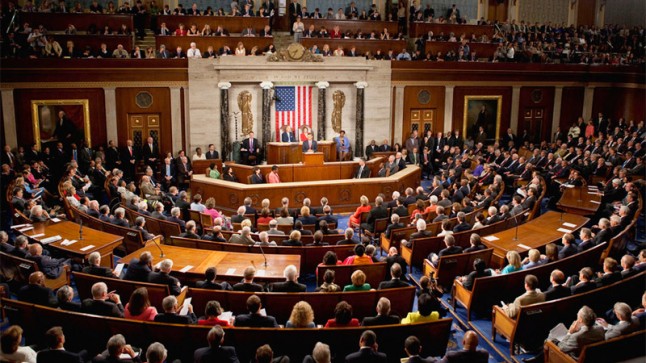
A republic, as anyone my age who passed high school Civics class can tell you, is a representative democracy. We elect people to represent us as members of the local school board, city council, or state or federal Senate or House of Representatives. We trust them to educate themselves about policy and the implications of the various laws and other policy items they vote on and then to defend those votes to their constituents. We may not agree with them one hundred percent, but we gauge their performance not on how much we agree with them but on how much they accomplish for our own good and the good of the country.

Not anymore. Now we want to vote on everything, every time, or we want our "representatives" to simply cast a vote on our behalf, just as if we were sitting in that chamber. Never mind that most of us don't know a tenth of the implications of the votes we would like taken on our behalf. Never mind that we can generally be trusted only to act in our own self-interest rather than in the interest of others. Vote my way or get out, Mr. or Mrs. Representative!

What has this brought us? Timid and reactive politicians. Witness the immigration debate. If you held a majority of House Republican's feet to the fire, most would agree that some version of the current Senate-passed immigration reform bill makes sense. But they won't support it. Why? They're afraid. Not afraid of immigrants, or of them taking jobs from others, or anything you might expect. They're afraid of being defeated in their primary races by someone more "conservative" (read: right-wing) then they are. They are afraid of not being re-elected. Not failing to be re-elected because they haven't done enough, but failing to be re-elected because their "base" constituency will be whipped into a froth and vote them out on this issue only--regardless of whether or not it makes sense.

Couple this with the obscene amount of money it takes to mount a credible campaign, which mostly relies on simplistic 30-second commercials about how awful the other candidate is and how they supported this bill or that bill, and how awful it is that they could compromise on such an important issue (whatever that issue is) and you end up with representatives who spend half their time raising money, a quarter of their time campaigning for re-election by deriding their opponents, and it is no wonder there is little time to even come up with a nuanced version of any issue, much less to foster the kind of across-the-aisle relationships that getting anything done requires.

My solution? Evaluate representatives not on how closely they aligned with your own views on various policy issues, but on how much they actually got accomplished. Did they participate in crafting and passing a more or less realistic budget? Did they reach across the aisle to collaborate with others to get a reasonably good law or policy passed? Did they reach out to ALL of their constituents (not just donors or their "base") with thoughtful discussions and defenses of their votes? Then re-elect them. If they just reacted to the latest 30 second commercial, bowed to pressure from their fellow representatives on their side of the aisle or, worse, their "leaders", vote them out.

At least, that's what I think.

Saturday, July 06, 2013

World Domination Summit, First Cut

This post represents some initial impressions after being at one of the most remarkable conferences I've ever attended. After an opening word and concert Friday night at the Oregon Zoo, we had several plenary speakers over two days at the Arlene Schnitzer Concert Hall in downtown Portland, Oregon and many afternoon seminars from which to choose. Any number of people have asked me why I went and what I wanted to get out of this. As a first-time WDSer, I have a confession to make.

I have no idea.

WDS is so hard to describe. The best tag line I've run across is "living remarkable lives in a conventional world." WDS seems to be the quintessential "out of the box" conference---in other words, if you are (or want to be) out of the box, this is the conference for you. I'm still processing all of the things I've learned, but one big thing I've learned: I have heard more about being your true self, following your dreams, and truly being community in 48 hours here than in many years of church conferences. 

As I've explained it, most of the conferences I attend tend to be what might be called "industry" conferences--talking about how to grow your church, reach out into the neighborhood, preach better, study the Bible, etc.... They're pretty much designed to appeal the the clergy that attend them. They also have to be relatively inexpensive, all the better to fit into Continuing Education budgets. But what most of them end up as are low-budget discussions of Jesus, the church, arcane Biblical truths, or other "shop talk." That isn't always true, and I've been to my share of great conferences, but there's always sort of an implicit "us/them" thing going on. "How do we get them to come to us?" "How do we get us (in the church) to go to them?" There really isn't a realization that people can lead perfectly good, even remarkable, lives without being a disciple of Jesus, much less a church-goer.

As I noted above, I'm still processing all of my learnings, and I'll no doubt have more to say. I'm just glad that I came. I hope my life is more remarkable because of it and I'm going to try and make it so.

Stage at WDS 2013

Sunday, October 28, 2012

Bad Theology and Acts of God

“Even when life begins in that horrible situation of rape, that is something that God intended to happen." -- Richard Mourdock

No doubt you have read or heard about the quote above and the firestorm that has followed it. Among a great many other comments, it provoked this blog post from Susan Russell. The blog post itself is about the mistake of writing our own theological convictions into law in a secular democracy. I'm with Susan on that one--if we are against a country instituting Sharia law as their civil law, why are so many of the same people eager to write evangelical Christian theology into law in this country? Yes, we do legislate morality--from the regulations we support to the tax breaks we give--but it should be a morality common to the vast majority of citizens, not the interpretation of a shrinking faction of them.

But that isn't what I want to blog about. I want to talk about the flawed theology the under-girds Mr. Mourdock's statement: the idea that everything that happens to us is under God's control. If it happened, then God intended it to happen.

This theology is most often expressed, unhelpfully, in the wake of a tragedy. I've especially heard it after the untimely death of a loved one. Phrases like "God must have needed him in heaven" or "God meant for this to happen" or "God must have some reason for doing this" are attempts to make sense of the senseless--and to hang that effort on the belief that God controls each and every thing that happens in this world. Even insurance companies use the term "act of God" to describe a natural disaster.

Books can and have been written about why bad things happen to good people. The point is that ever since the Garden of Eden, there have been two things that blocked God's will from being done in the world: human sin and random chance. If one accepts the Garden of Eden story even as an allegory, the question comes up: Did God intend for Eve to eat the apple? No, he specifically told her not to do so. Why did he even put the forbidden tree in the garden? Because following God's will without a choice is not discipleship, it is slavery. The Bible is filled with people who were asked to make choices about their lives and the results of those choices.

It is also the case that the world functions via natural laws--tidal waves, hurricanes, earthquakes, storms and other natural phenomena don't ask whether or not there are people living in that place--the event happens regardless of whether there are two or two million people living there. Along side natural law is random chance--in other words, stuff happens. God may be omnipotent, omnipresent, and omniscient, but God has chosen not to control everything that happens in the world. Just as human beings have free choice about whether they follow God's direction or not, the world is also not subject to God's direction. Evil exists. Disease happens. The world is a fallen, imperfect place. It is not the Kingdom of God.

All of this provides, or should provide a sense of perspective to the Christian. Whoever ends up winning the election in a little more than a week or so, God will still be God and the world will still have the problems and challenges that it has. The way we deal with those issues as people of faith is probably more important than even this issues themselves. God does not cause tragedy, but God does help us deal with tragedy. And that is an act of God.

Monday, July 30, 2012

Money, Politics, and the Race to the Bottom

I don't usually get too political on this blog, but I just received an email, ostensibly from Vice President Joe Biden (but really from the Obama campaign) with a message that made me sit up, take notice, and sigh deeply. The message was this:

"If we don't win this election, it will be because we didn't close the spending gap when we could."

Really? Has our nation become so politicized, so polarized, so shallow, that the Presidential election will be decided solely by who has raised the most money? If that's the case, couldn't we at least do it for a worthy cause--sort of like Presidential telethon for, say, cancer. The one who raises the most money for the cause wins the election. At least then it wouldn't be literally billions of dollars spent on increasingly negative ads tearing down the other candidate and distorting his or her words and/or record. Perhaps I'm neither naive or just idealistic, but I would hope that the reason anyone loses an election is that the ideas and policies put forth by him or her at least seem better than the ideas and policies put forth by his/her opponent. Period. 

I'm pretty tired of the zero-sum political game--every policy question is framed in terms of who "wins" and who "loses." Even some TED talks are being restricted because tax policy is deemed "too political." Check this one, for instance:


This is a person who has "been there and done that" as far as starting a business, and has been extremely successful doing so. Yet his testimonial is deemed "too political" in the current environment. 


I long for a day in which people argue policy questions and come to a compromise solution that is good for the country. As long as we vote for whoever comes out on top of the fundraising smackdown, everyone loses.

Thursday, July 26, 2012

The Sound of Silents, Volume II

I may be odd in this way (I certainly am in other ways!), but generational identity fascinates me. The idea that we are formed by the culture in which we grew up, by the events we lived through, even by the number of people who grew up alongside us, is interesting in both personal and professional ways. A new blog entry entitled Generation X Doesn't Want to Hear It (warning, profanity) essentially expresses what most my fellow Generation Xers have known: we are destined to be forgotten. Either we will be the bridge between huge generations (Boomers and Millennials) or we will be water under the bridge. In many ways, we are the forgotten especially now.  The youngest of us have broken 30 years old and most of us have topped 40 and are no longer the "cool youth demographic" that is often defined as under 35 years old, especially in the church.

We are similar, in many ways, to the generation known as the Silent Generation (born 1925 to 1942). My parents are the youngest members of that generation, born between the Great Depression and World War II and coming of age in the 1950s when underneath the post-war celebration, the tectonic plates of cultural change were beginning to shift and cause the great cultural earthquake of the 1960s. GenXers were born largely from the Silent Generation, born during the sixties with little memory of the turmoil or during the seventies when things were sorting themselves out after the tumult and things like gas lines and pop music were primary memories.

So, what can we learn from (gasp!) our parents in the Silent Generation? Well, first, that they (like we) are/were a diverse lot--George Carlin, Peter, Paul and Mary, Newt Gingrich, Harrison Ford, and John McCain are (or were) of this generation. Wikipedia notes that:
In their book Generations, William Strauss and Neil Howe define this [Silent] generation as an Artist/Adaptive generation. An Artist (or Adaptive) generation is born during a Crisis, spends its rising adult years in a new High, spends midlife in an Awakening, and spends old age in an Unraveling. Artistic leaders have been advocates of fairness and the politics of inclusion, irrepressible in the wake of failure.
If Generation X is similar, we were born during the cultural and economic crisis of the 1960s and 1970s, came of age in the 1980s and 1990s while watching Silicon Valley and technology transform our lives and then saw the dot-com boom and bust and, during our (mostly young-) adulthood, the events of 9/11. By the pattern of the Silents, we are in a state of Awakening and they are in a state of Unraveling.  The legacy of the Silent Generation may be that they kept the country stable long enough for the Boomers to come of age and for the Generation Xers to survive our childhoods.

The other lesson and legacy of our Silent Generation parents is that we inherited the "adaptive" gifts and skill set--we appear to be able to adjust rapidly to changing realities, a skill forged during the technological revolution and the ups and downs of economic and political life. We're not quite the "fix it myself" folks that the Silent Generation are--many of them grew up on farms and learned to make do with the physical resources they had where as we grew up in suburbia and learned to make do with the emotional and mental resources we had.

This is only the beginning of some time I'd love to spend reflecting on lessons that I any my fellow GenXers can learn from those we are generationally (and sometimes literally) our parents. We'll see where that leads!

Thursday, April 19, 2012

From Assembly Line to Artisan

I am a huge fan of RSA, and more specifically the RSAnimate video series. Recently, I ran across a great video from 2010 discussing the huge challenges facing education in the twenty-first century. Check it out here:


I think the author, Sir Ken Robinson, makes some excellent points. I began formal schooling nearly 40 years ago. When I began, we did do a lot of playing, interacting with the world, and (yes) learning in the process. Fairly quickly, however, we ended up in a classroom with rows of desks, teachers in front of blackboards, heavy textbooks which we were not permitted to write in, and, increasingly, being taught subjects we had no interest in and many of which seem to have no practical application. So, now my children are in school and what fantastic progress has been made in almost 40 years? Well, there is more "group work" and children sitting in "pods" of four to six children (which has its own problems for those of us who are introverts, as this video points out). There certainly are more computers, smart boards, and other technology. White boards with pens have replaced blackboards with chalk. There is a lot more standardized testing.

Aside from all of that, kids are still being stuffed into classrooms with teachers in front of white boards, taught subjects of questionable utility from heavy textbooks (which they're still prohibited from writing in) and penalized if they don't find this as scintillating as conversations with one another or staring out the window, of which there are increasingly few. The comparison to a factory churning out groups of standardized students made in the video is painfully apt. We appear to be doing almost exactly the same teaching, with some technical modifications and "improvements" as we did four decades ago.

That lack of progress would be enough of a tragedy, but it is compounded by the fact that the world in which we are training our children to take their place as contributing citizens not only will not exist when they graduate, it does not exist now.  We live in a hyper-networked world where I can more easily contact someone halfway around the world than I can run down the hallway and see them face-to-face. We have access to more information in less time than anyone in human history. The speed of innovation is increasing exponentially--and our institutions and infrastructure are imploding.

From politics, to nonprofits, to corporations, and even to the church, institutions that launched the Baby Boomers into the world as arguably the most successful generation in history are crumbling in the face of a lack of common purpose, a lack of money, and a lack of a compelling rationale for their continued existence. Rather than seizing this opportunity to re-make the world with the revolutionary fervor of the 1960s, most of those Boomers and Xers in power are fighting a doomed fight to preserve what can be preserved of what was. And, sadly, they are being rewarded for doing so by constituents and consumers in a sort of "race to the bottom."

The solution is easy to say and difficult to implement--primary because it requires qualities that our parents and grandparents had but which seem increasingly in short supply: sacrifice and courage. We need to acknowledge the reality that some long-cherished things are dead or in their final stages of life. We need to think creatively about how to re-make the United States as a successful twenty-first century country in a twenty-first century world, and we need to reward politicians and corporate leaders for truth-telling and courageous leadership rather than for telling us what we want to hear. And we need to do this now, before a generation or two of people emerges that are ill-equipped to deal with twenty-first century realities and can only watch helplessly as things (sometimes literally) sink beneath the waves. It is also going to require that we recognize that the world has moved from the assembly-line back to the artisan, the craftsman, this time in the craftsmanship of the mind. We need to reward and enhance creative thinking rather than penalizing it--because we can't keep doing what we've been doing for the last half-century.

I think we can do all of this, but it is going to require us to resist easy answers, to know that the economic party of the 1990s and 2000s is over, and begin the make the adaptive changes needed rather than simply doing some technical tweaking.

Here ends the sermon.

Tuesday, March 20, 2012

Tradition: Foundation Stone or Rock of Sisyphus?

In my December post, I recounted the words of the now-retired Rector of St. Bartholomew's Church that the Episcopal Church has a "huge and nearly immovable weight of tradition" that often prevents it from adapting well or quickly to new realities. Last week, Archbishop of Canterbury Rowan Williams announced he was resigning to become head of Magdalene College at Cambridge. In a recent interview, Williams discusses tradition and the "fresh expressions of church" movement in England:
Remember, you're not the first people to read the bible. There's twenty centuries of people praying and thinking through scripture and passing on their wisdom. It would be wonderful if we could recover a really lively and positive sense of what tradition meant. Not this great weight pressing down on you---this is how we've always done it---but there's this great reservoir of experience and wisdom which we're free to draw on and grow with.

And I think that is one lesson that all new kinds of congregation[s] have to bear in mind. The more traditional, traditionally mainstream kinds of church, need to know that the church is always being restored and renewed from unexpected places. The new, renewing, bits of church need to remember that God has not abandoned His church over twenty centuries and has been giving gifts all the way through to learn from. So it's that balance, what I once called the "mixed economy" of the church, which I think keeps us fit.
That got me to thinking about the nature of tradition. On the one hand, it can and does form a solid foundation upon which to build. On the other hand, it can just as easily become the proverbial Rock of Sisyphus that folks get tired of moving.

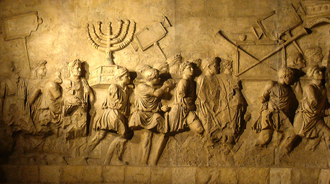
I think this has a lot to do with an emerging (no pun intended) idea that this post-Christian time period is much like the time after the destruction of the temple in Jerusalem in 70 A.D. We're in a post-establishment time and there is a huge temptation to metaphorically attempt to carry some of the foundation stones away from the now-destroyed temple in an attempt at reconstruction, or at least an attempt to hold onto a symbol of the way things used to be. Contrast that with Jesus' words about the temple that were read two Sundays ago:
Jesus answered them, "Destroy this temple, and in three days I will raise it up." The Jews then said, "This temple has been under construction for forty-six years, and will you raise it up in three days?" But he was speaking of the temple of his body." (John 2:18-21)
Jesus also famously said to his disciples, upon sending them out for the first time:
"You may take along a walking stick. But don't carry food or a traveling bag or any money. It's all right to wear sandals, but don't take along a change of clothes. When you are welcomed into a home, stay there until you leave that town. If any place won't welcome you or listen to your message, leave and shake the dust from your feet  as a warning to them." (Mark 6:8b-11)
I'm just beginning to unpack the metaphor of the similarities between post-temple Judaism and post-Christendom Christianity, but the lesson for us may be to be quite careful about what we choose to put in our "tradition packs." When I was a child, our family used to take backpacking trips regularly. When one backpacks, the object is to make things as light as possible, since you are going to be carrying anything you pack for many miles. So, things are re-packaged to minimize weight, one makes use of freeze-dried foods that are much lighter than regular food, and one is very careful about what sort of "extras" one takes--and things that seem critical in regular camping, not to mention around the house, rapidly become "extras" when one is forced to carry them for many miles on one's back!

Perhaps that is what we're doing these days in the church--we're packing for an ecclesiastical backpacking trip. We're trying to sort our the essentials from the extras--and sometimes finding out that things that seemed essential when we were in the comforts of Christendom have become extras now that we are packing for a trip into the ecclesiastical and spiritual wilderness. Perhaps we also need to unload and drop our temple building-stones and recall that Jesus is talking about himself when he says:
 "Then what do the Scriptures mean when they say, `The stone that the builders tossed aside is now the most important stone of all'? Anyone who stumbles over this stone will get hurt, and anyone it falls on will be smashed to pieces." (Luke 20:17b-18)
Pack carefully....

Thursday, January 26, 2012

Maintenance, Mission, and Ministry

I just watched a video greeting (via Episcopal Cafe) by Presiding Bishop Katherine Jefferts Schori, ostensibly to the deputies to General Convention 2012, but is useful for everyone to begin to think and pray about what sorts of structures are useful in nurturing mission and ministry in our multicultural, postmodern context and which are either less useful or, worse, actually choke off the Spirit's work in and through us.

I'm glad that we're having this conversation. While I don't think maintenance and mission are mutually exclusive, a balance between the two would seem a necessary prerequisite to effective ministry in today's fluid and networked world. I am aware, however, that there is a temptation to overcompensate by simply getting rid of nearly all structures in the name of freedom of ministry. I don't really think that is a great idea, either. The Episcopal Church has a sense of order and a Benedictine value of stability within its DNA. While some of the structures might tend to be stifling, other (such as the ordination and disciplinary canons mentioned in the video) have their place if properly applied. I don't think anyone wants to go back to the days when the "ordination process" was merely a nice chat with one's bishop, with little involvement from others nor a disciplinary process that involved an uncomfortable conversation with that same bishop and then a quiet resolution to the issue. Generally transparency and communal discernment are to be commended.

That said, it makes complete sense to ask the question: "Why are we spending over half of our financial resources keeping the structures functioning?" Some of the reason is provincial--no one wants to have their department cut or committee dissolved and there is some concern that a leaner church structure is also a less democratic one. I'm not quite sure that democracy is a Gospel or biblical value, but even if it is, a denomination with less than 2 million people that has a legislature larger than the United States congress that meets every three years for a marathon legislative session seems more than a little out of balance to me.

I'm not a deputy to General Convention. I am a member of our own diocesan Standing Committee, and we also are asking questions about the structure and purpose of various ways of doing things. Like cleaning out closets, it will be an interesting process of deciding what to keep, what to throw away, and what to re-purpose.

Tuesday, December 13, 2011

Building a Legacy vs. Leaving a Legacy

The Rev. Bill Tully, Rector of St. Bartholomew's Church (where Julie Nelson, St. Edward's Priest Associate for Evangelism, once served) has written an excellent article in the Washington Post. Among his many keen observations, Bill stays this:
Episcopalians are the ultimate and extreme “legacy church.” No matter how committed the local rector is to change, no matter how deft she or he is in managing it, there is a huge and nearly immovable weight of tradition. Some of it is so good that it might--rightly reinterpreted and freshened--be the way forward to real growth in size and health. But it takes a lot of energy. We almost inevitably tilt backward for every step and a half we take forward.
I would very much agree. The very thing that is the most distinctive about the Episcopal Church--our stability--is also what makes it difficult for us to change. I've likened the Episcopal Church to a battleship or an aircraft carrier: incredibly difficult to sink, but also very difficult to turn! Unfortunately, the navy stopped making battleships years ago and the only thing that keeps aircraft carriers from going the same way is that they carry nimble and highly mobile aircraft. To continue the metaphor, evangelical mega-churches are aircraft carriers, Episcopal congregations are battleships. Both exist in an era when fast patrol boats seem much more suited to the way things need to be.

I have no real interest in leading The Church of What's Happening Now--a place that uncritically reacts to the current fashion and "felt needs" of the surrounding culture. Just troll around the Internet and you'll find a whole range of programs that are guaranteed to grow churches. In contrast to fashion, tradition is an excellent anchor in the midst of a cultural storm, holding us fast to the things that are important. However, tradition in and of itself is not enough. Tully goes on to say:
Bishop Budde of Washington is absolutely right about concentrating on the meat and potatoes of local congregational life: worship, music, compelling preaching, education, pastoral care. Taking stands on issues at the national level (where few people pay attention to us any longer) might be satisfying, but we’ve just about spent ourselves doing that.
That's what we're in the process of re-creating at St. Edward's: a place with vibrant worship, quality music, compelling preaching, a variety of educational offerings, and many ways of caring for others and being cared for as well. That kind of tradition is worth building on! The difficulty lies when we concentrate so much on leaving a legacy for "future generations" that we end up building and sustaining museums of ancient faith rather than concentrating on building a legacy alongside those right outside our doors that may not worship in the same way we are used to doing, but have a deep (perhaps even unnoticed) love of ritual, a more progressive theology, and a need for community. Building is challenging, but do-able!

Tuesday, November 22, 2011

Fear and Leadership

In an organizational culture where respect and the dignity of individuals are held as the highest values, shame and blame don’t work as management styles. There is no leading by fear. --Brene Brown 
The above is just a portion of a brief, but excellent, blog post regarding the recent Penn State scandal. Her point is that any organization can create a culture that either fosters respect and accountability or fear and denial. Organizations that do the former are healthier, dynamic, and ultimately more successful organizations, though they are often not as outwardly peaceful as those that thrive on shame and blame. This is no less true of the church--churches where both staff and members actively engage in conversation with one another out of respect for "the dignity of every human being" (as our Baptismal Covenant says) may not look as peaceful or contented, but they are healthier, more dynamic places to be. Churches that enforce a kind of false peace based on shame and blame ultimately either slowly burn out or explode as individuals either take advantage of the system or our victimized by those who do.

There is a lot of fear around these days, both in the world and in the church. Both infrastructure and institutions built by previous generations seem to be disintegrating at an alarming rate. More and more people are feeling disenfranchised, cut off from any say in virtually any aspect of their lives. The Penn State scandal is but the latest in an unending parade of exposing the reality behind people and programs we thought we could trust. In a blog post by Thomas Day, he writes:
Think of the world our parents’ generation inherited. They inherited a country of boundless economic prosperity and the highest admiration overseas, produced by the hands of their mothers and fathers. They were safe. For most, they were endowed opportunities to succeed, to prosper, and build on their parents’ work. For those of us in our 20s and early 30s, this is not the world we are inheriting.

Day, at 31, was born in 1980, placing him on the cusp between Generation X and the Millennial generation. He lays the blame for this collapse on the leaders that the Baby Boomers have brought us--the logical extension of a generation that shunned institutions at the same time as they benefited from them. It is apparently our generation's sad duty to inform our children (millennials and those younger) that the American Dream is dead, the emperor has no clothes, and that the Great and Powerful Oz of the optimistic Boomer generation is no more than a lucky, grumpy old man.

Sadly, many people, both within and outside the church, leave things there--in despair, at Good Friday, if you will. But we repeat over and over again that we are "Easter people," not stuck in the tomb of death but partaking of resurrection life. That is not some sort of "put on a happy face" Christianity. No, it acknowledges the reality of death, but asserts that such is not the end of the story. The reality of resurrection means that we can take a hard, deep, penetrating look at the world around us, name clearly the things which are not right about it, and then partner with God in the redemption of our broken, disintegrating, world. The challenge, of course, is actually adopting and living into an attitude of "realistic optimism" that sees things for what they are, but also for what they should and can be. And we need leaders, both within and outside the church, who are willing to be foolish and risk-taking enough to move forward in hope rather than allowing us to linger in despair.

By the grace of God, may I be one of them!

Tuesday, October 11, 2011

"Uncle Steve" Jobs

Steve Jobs 1955-2011

Much has been said and written about Steve Jobs after his death this past Wednesday. Having never known him personally, never even having worked at Apple, the only connection I have to him is as an Apple customer and stockholder. That said, many of my contemporaries and I feel almost as if we've lost a beloved but distant uncle. Growing up in Silicon Valley, the legend of Apple's first first "run" with the Apple II and Macintosh is eclipsed only by the legend of the rebirth of Apple with the iMac, iPod, iPhone, and iPad. I was still a small child when Johs graduated from the high school just south of the one I would attend a decade later, but I hit middle school about the time the Apple II emerged and I well recall the sheer joy of using a computer with color, speed (for its time), and floppy disks rather than cassette tapes.

So, in many ways, Steve Jobs was the author of my childhood obsession with computers. Perhaps that is why I and others of my generation mourn his passing so much.  The passion he brought to technology, the conviction that technology not only could but would change the world, is one that he lived out with single-minded determination.

This is not to say that Jobs was a saint. At least one blogger has some very pointed criticism of him, much of it on target. He was often ruthless in his pursuit of excellence. His desire to see his biography published so that "my kids will know me better" signals that, like many in Silicon Valley, he had the tendency to prioritize job over family. However, his genius for designing technology that people could (and did) fall in love with is unmatched in modern-day America. His famous commencement address at Stanford University ranks among the best ever.

Though I didn't know him, I use Apple technology almost every minute of every day. I wake up to the alarm from my iPhone, check my calendar on that same iPhone, work every day on a MacBook Pro, use my iPad to watch videos and read books, and pretty much just love Apple products with a passion. I hope that I can increasingly take this passion and "can do" spirit into my job as a clergy leader as well.

Wednesday, August 24, 2011

Back to blogging: Ecclesiastical Antibodies

After essentially taking the summer off from blogging, I'm back with fingers to keyboard. As Summer turns to Fall, I've been thinking a lot about change. At St. Edward's, where I continue to serve as Priest-in-Charge, we've absorbed more than our fair share of changes in my almost two years here. What is interesting is looking at corporations who also are confronted with such changes.

In an article today by Philip Elmer-Dewitt, he talks about a recent podcast by Horace Dediu. In the article, Elmer-Dewitt quotes Dediu as saying the following:
There's a phrase I like to use: "the corporate antibodies." These are things inside the company, as an organism, if you will. These are entities -- be they people or budgets or processes or rules in binders. These are things that are designed to eat up innovation. To eat up changes to the core business. Not because they are stupid. But they see this newcomer, this entrant, as a pathogen. As something that's damaging the organism. So they act, sometimes even collude, to destroy it.
Dediu goes on to draw a contrast between computer giant Hewlett-Packard (which recently gave up on its tablet computer and signaled that it is getting out of the PC market as well) and Apple (maker of the most popular tablet computer). Dediu's point, reiterated by Elmer-Dewitt, is that for innovation to take hold in an organization, the people promoting it have to be protected from the "corporate antibodies" that are out to destroy them, preferably protected by the CEO him/herself. Jobs tried to do that with the Macintosh, and was forced out of Apple by the "Apple II" forces. As fascinating as this is, one quote of Dediu at the end of the article really caught my eye:
[A certain innovation needed] this kind of champion at the very highest levels, someone who could endure the gestation for a long period of time. And that type of person is so rare as a CEO. Which is part of the mystique and magic of Steve Jobs. He's the only one that we know of  really that is able to do these types of schizophrenic things -- like maintain a sustaining business and its disruption within the same organization.
"Maintain a sustaining business and its disruption within the same organization." When I read that, it suddenly struck me: "That's what we are trying to do in the church!" We're trying to respond to the needs of a post-Christian world with new and innovative things that, more often than not, get "killed off" by "ecclesiastical antibodies" trying to preserve our "sustaining business." Developing something new alongside that, often referred to as "parallel development" is, in reality, trying to "maintain a sustaining business and its disruption within the same organization." That's really hard to do! The fact that one of the most compelling images of the church is the Body of Christ makes this metaphor even more apropos!

What this says to me in my ministry is that if I want to be a church leader that fosters and nurtures innovation, I have to be willing to protect it from ecclesiastical antibodies. I also have to be willing and strong enough to at least make the attempt to maintain what is and what may be its polar opposite in the same organization, the church. I think I'll sit with that for a while. This is even more timely on the recent news that Steve Jobs has resigned as CEO of Apple.


Thursday, June 23, 2011

Is it well with my soul?

As the church program year winds down and makes way for Summer, time and permission are given to all of us for a bit of reflection. Since this Fall will mark two years of my tenure as Priest-in-Charge of St. Edward's, and since we're in the midst of both a diocesan and parish strategic planning process, there have been reasons stacked upon reasons for such reflection. While I've begun the parish part of that reflection on the parish blog, it seems like at least some account (on this blog) of my personal reflections is warranted.

In my daily Facebook trolling, I came across this list of 10 Ways to Boost Spiritual Health. I recognize a number of spiritual disciplines--personal worship, journaling, prayer, personal (rather than simply professional) bible study--that I recall doing with much more faithfulness when I was in college and had newly discovered a more personal relationship with God in Christ. Like getting enough exercise and eating right, sometimes living life accidentally or on spiritual inertia can sneak up on a person. A good reminder.

As I read that "fitness list," I recalled another bit of wisdom shared by Brian McLaren, author of "Naked Spirituality" in his address at the 187th Commencement of Virginia Theological Seminary (my alma mater). He strongly encouraged the graduates (and, by extension, we alumni and friends) to guard and grow four friendships: with ourselves, with soul friends, with non-Christians, and with God. As McLaren said "it is sometimes difficult for those of us who are paid to be good to simply be good for nothing." Sometimes being a "professional Christian" gets in the way of simply being an intentional follower of Jesus Christ.

As I move through this summer of discernment, a big piece of my discernment is to look at where I have allowed my professional life to take over my personal life--in my relationship with my family and friends but also in crowding out hobbies and other things I do just because I like doing them. A good discipline for anyone, I'd say.

Wednesday, June 01, 2011

If love wins...share it!

Nearly two months since my last post, I'm finally crawling out from underneath the pile of tasks on my plate (the pile of stuff on my desk is another matter...!) and have been giving some more serious thought to the shape of the twenty-first century church. There have been several items that have come across my screen lately that have caused me to pause and think more deeply. As you will note on the "Blogs I'm Following" list on the right, I follow the blog of Rachel Held Evans,  a self-proclaimed "writer, skeptic, and Christ-follower" whose reflections I've really enjoyed reading she recently appeared on an episode of Darkwood Brew, a "groundbreaking experimental web television program and Christian worship service" located in a coffeehouse in the Midwest.  After listening to that interview, and then going to the Darkwood Brew web site, I also happened upon an interview that they had done with Diana Butler Bass, who happens to have just come to the Diocese of El Camino Real a couple of weeks ago to talk about twenty-first century spirituality. Having recently published a book entitled A People's History of Christianity, she talked about the blend of spirituality and religiosity that is coming to dominate church and society in this second decade of the twenty-first century.

Both Rachel and Diana's interviews were a part of Darkwood Brew's series based upon Rob Bell's book Love Wins. The questioning title of the series is "If love wins, what now?" In both interviews, the point is made that the "orthodox" concept of, and concentration on, hell as a fiery place of eternal torment  is actually one born out of the Roman Emperor Constantine's fascination and obsession with the power of God to vanquish his enemies. Prior to that time, the Christian church was primarily focused on visions of heaven. If they even spared it a thought, hell was simply the place that was not heaven. It is when God's power is bound to earthly war and violence that hell becomes a punishment for enemies and unbelievers.

All of this is swirling around in my mind this morning as I contemplate this Sunday's lesson from the book of Acts, where (among other things, including ""It is not for you to know the times or periods that the Father has set by his own authority.") Jesus says "But you will receive power when the Holy Spirit has come upon you; and you will be my witnesses in Jerusalem, in all Judea and Samaria, and to the ends of the earth." That power is not presented as the power to coerce belief, but the power to witness to God's work in the world.

I'm also conscious, as I click from one thing to another online, that people have plenty of opportunity to find out information about Christianity, of whatever flavor. I found all of the above from initially being directed to Rachel Held Evans' blog via (I think...) a Facebook posting. From there, I found Darkwood Brew, and from there I found Diana Butler Bass, who I had just seen in person and who had greeted me almost as an old friend, though we had only been Facebook friends until then. It strikes me that the "witness" that we bring is not primarily a witness of information, but a witness of re-creation and restoration--that God is constantly in the midst of re-creating and restoring this world in partnership with us. That sort of witness is worth sharing!

Thursday, April 07, 2011

"Contempervent" Worship

Many months ago I saw a video poking fun at so-called "contemporary worship" and have been searching for that video ever since. Today, it crossed my Facebook page, so here it is:


I do like songs that I hear on radio stations like K-LOVE, but I recognize the temptation to let the means of conveying the message of the Gospel become the Gospel itself. This is no less of a danger for more liturgical churches. Everyone has the temptation to say "It isn't worship if ____ isn't included." So, enjoy the humor but also get the point.

Thursday, March 31, 2011

Government Involvement, Personal Freedom, and God's Purposes

OK, I'm going to go out on a limb here and post something more political. Fee free to skip if you wish. I'm one of that rare breed: a moderate Republican. Even rarer, I'm a Republican for Obama. I'm certainly not rare in that I'm (obviously) a Christian as well as a Republican. I do believe in limited government and that, in many cases, government has overstepped its original mandate to "establish justice, ensure domestic tranquility, provide for the common defense, promote the general welfare, [and] insure the blessings of liberty to ourselves and our posterity..." (constitutional preamble). Just because a law can be passed or a program can be funded doesn't mean that it should.

That being said, I'm increasingly feeling like my fellow Republicans are using the current state and federal fiscal crises as a "license to kill" any program that they've wanted to do away with for years for ideological reasons, regardless of its costs and benefits. A perfect example is the program whose board I sit on--Live Oak Adult Day Services. It is a program that provides care for seniors who would otherwise need constant care from relatives or would be relegated to nursing homes. From a fiscal point of view this is a complete no-brainer: the support that government entities, foundations, and individual contributors give to this program is infinitesimal compared to the amount of money saved by allowing caregivers who would otherwise need to stay home with these folks the opportunity to work, by keeping these seniors out of (often Medicare-funded) nursing homes, and delaying the need for (often expensive) in-home care. If you look at the cost/benefit analysis, this program work and has good "bang for the buck". Yet cities that are strapped for cash are having a hard time finding even the limited funds now used to support the program. The key words here? It isn't a mandated program.  Other things are.

The whole problem with the personal freedom vs. government involvement debate can be illustrated on any public school playground. Left to themselves, people will generally act in their own short-term self interest. They will spend money now rather than wait and perhaps have to spend less later. They will not think about what they might need 5, 10, 20, or even 1 or 2 years out. Government exists, then to "promote the general welfare" by mandating that we take care of each other and of the instituions that will (God willing) take care of us when needed. Government funds alternative energy not because it is cheaper now than fossil fuels (although we're getting there, on both sides of that equation) but because it is in our long-term interest to develop alternative sources of energy. Government mandates energy efficiency (like increasingly efficient light bulbs) because we cannot sustain our current rate of energy consumption over the long term. Government funds programs like senior care, schools, and other service not because it has nothing else to do with the money, it does so because we need those institutions, either now for ourselves, our children, our parents, or our friends, their children and/or parents, or for us when we get to whatever stage in life that requires such services.

On the flip side, my fellow Republicans appear to have absolutely no problem continuing, even expanding, tax breaks for wealthy individuals and corporations, some of whom have even said that they don't need them! If "no government involvement" is good policy for social services, why isn't it good policy for corporate subsidies and tax breaks? The double standard is stunning.

OK, enough ranting. My hope and prayer (and it seems like more of a prayer than a hope) is that we will elect (and re-elect) those folks who are willing and able to rise above partisanship, to cut spending on or fix programs that are ineffective, to "promote the general welfare" by taking care of the most vulnerable folks around is (and, equally important, help them to help themselves), and "insure the blessings of liberty to ourselves and our posterity (i.e. future generations)" by tackling and solving major problems before our entire social and governmental fabric collapses--which seems increasingly likely as the days and weeks go on.

What does all of this have to do with God, one might ask. God allows us to make our own choices in this world. God also works through both individuals and institutions to accomplish God's purposes. God is especially concerned with the plight of the poor and powerless and has very little concern for the rich and powerful, except to warn them that their wealth and power are fleeting and are to be used for good and not for selfish ends. To say a policy or law is "Christian" that does not align with that concern for the poor and responsibility of the rich means one is being extremely selective in their Bible reading. No, we don't have unlimited funds or unlimited energy. We do have to make choices. May they be choices that are both in our long-term interest and also reflect God's concern for those without a seat a the table.

Saturday, March 19, 2011

Beautiful Music

As we finish out the week of St. Patrick's Day, I thought I'd pass along a particularly great video clip from Celtic Woman, the musical group made famous by their appearance on PBS. Sure, they're a little over-produced, but their voices are angelic and the songs are fabulous. So, enjoy!

Saturday, February 26, 2011

Vunerability and Radical Welcome

Another colleague of mine (as one of my seminary professors used to say "I am not original.") recently highlighted the following talk by Dr. Brene Brown discussing the necessity for vulnerability in our lives. Take a look:


This dovetails with the talk about Radical Welcome from The Rev. Stephanie Spellers at our clergy conference a couple of weeks ago. At that conference, she invited us to share with one other person two experiences: an experience of being unwelcome and an experience of being welcome. In the midst of that, I realized that my entire ministry has been about creating and nurturing community--a place where people feel welcome and connected. A place, frankly, where people can be free to be vulnerable and admit their imperfections.

Frankly, and highly ironically, the church often makes this difficult. One would think that a faith tradition that is founded on the paradox of the crucifixion and resurrection of Jesus Christ would be the most welcoming to imperfect, shameful, vulnerable people. Instead, we've put ourselves out there as perfect people who have it together and just need a little touch-up or polish on Sunday mornings. Our perhaps unintentional message is that you are welcome to come to church if you are certain of what you believe, your life is nearly perfect, and you can navigate your way around a church service pretty easily.

I seriously doubt anyone qualifies to come to church under those restrictions.

Few people are certain of what they believe, and the ones that are most certain are often the most resistant to growing in their faith and understanding. Few people's lives qualify as anything close to perfect, especially in the world we live in today. Few people who have not grown up in the church have any idea what to do and when to do it.

So where does that leave me as a pastor and priest and St. Edward's as a congregation? It means that we need to be intentional about creating a place where anyone, doubter, seeker, or curious visitor, can explore the Christian faith. We need to be explicit that our church is a  place where you don't need to be perfect to walk in the door. We need to be helpful to those people who enter our doors for the first time so that they can be participants and not just spectators in our services. Finally, we need to proclaim far and wide that we're doing this, we're going to repeatedly fail at it, but we're going to keep trying.

Wednesday, February 23, 2011

Ministry of The Word and Sacrament

One of my colleagues passed this along to me:


Walter Brueggemann is arguably one of the primary movers and shakers in the theological world today. His critique, sparked by a conversation with a rabbi, that we as preachers spend the bulk of our time engaged in everything but preaching or preparing for preaching, and end up devoting a few remaining hours in our week after we've exhausted ourselves with other things, strikes a little too close to home for comfort. My desk is currently strewn not with books, articles, and sermon drafts, but with catalogs, various pieces of mail, budget drafts, and various other items primarily having to do with administration and the day-to-day minutia of running a religious non-profit corporation that happens to be a church. And, yes, I generally do not get to serious sermon preparation until later in the week, occasionally even sitting in front of a computer screen on Saturday evening finishing up what I'm going to say the next morning!

That fact sparks in me a thought about the different names that we're called as ordained ministers: pastors (means "shepherd"), priests (not very much anymore), ministers (though much more ministry is done by the many church members serving in the community), and (in my case) "Father" (which places the priest in the role as "father" of the church "family", which is often less than helpful). I know if few, if any, times in which I've been referred to as "preacher"--and yet that is a key part of what I do each week: speak God's words to God's people. My ordination vows place as one my primary tasks the "ministry of Word and Sacrament", by which is primarily meant preaching and administering the sacraments. Those two tasks do not seem to have the same urgency during the week as the "running the shop" tasks do, nor are preachers generally rewarded or given points for reading and studying. If a church member or board member asks a pastor "What are you up to today?" and receives the answer "Well, doing a lot of reading and some prayer" it sounds almost as if he or she is taking a vacation! That is because most people work at jobs that not only don't require much study (and zero prayer) but often preclude study and prayer. Thus, the often unconscious reaction for most folks is "Wow, I wish that I could get paid to sit around and read and pray!"

The fact is, however, that we our primary calling is feeding the flock of Christ. Jesus' first post-resurrection commission to Peter was "feed my sheep." Putting aside the comparison of church members to sheep, as preachers and pastors we cannot give what we do not have. If we have not studied and prayed, we will give shallow, largely meaningless sermons that do not even come close to satisfying the spiritual hunger that God places in each one of us. Perhaps we need to take more seriously the rabbinical side of our calling--to be the teacher and the scholar.

One of the things that I hope and plan to do this year is to get a bit more focus on my preaching--both by setting aside more time for preparation and by focusing my continuing education funds and time on honing those skills. Preaching is one of my gifts. Administration is not. However, since others can do administration but not as many can do preaching, it makes sense to hone my strengths rather than attempting to shore up my weak areas.

Friday, December 31, 2010

2010: A Church Odyssey

As the first decade of the new millennium comes to a close, there will be innumerable "top 10" lists, retrospectives, and even a few forecasts for the future. For myself, 2010 saw me complete my first year as Priest-in-Charge of St. Edward's, move into the Rectory (cutting my commute from 40 minutes to 40 seconds, as I like to say), and launch our new two-service Sunday morning schedule. It also saw us make some significant beginnings in addressing long-deferred maintenance on both our buildings and our programs. Sadly, the year ended with a decision to close the preschool we've been sponsoring for more than seven years. In many ways if feels a lot like the Rectory looked in early August halfway through the renovation--lots of potential, but lots of mess and a lot of work to do!

I think that is perhaps my chief reflection on my own ministry this year--a sense of digging into everything, clearing away accumulated stuff, and really getting a sense of the challenges ahead for me and for this church. These challenges are by no means unique to St. Edward's! We recently completed an Advent series where we invited my colleague and former Interim Rector here at St. Edward's, the Reverend John Buenz, to talk to us about "What's happening in our world?" and to suggest some trends worth watching. While there are many, the bottom line is that the era of the Christendom-based institutional church that simply opens its doors and welcomes the hordes of people clamoring to enter is finally dead after decades of decline. Few people not already in church are waking up on Sunday morning with the idea "Hey, I really need to find a great church to attend this morning!" The beauty of our buildings and our liturgy is lost on those who would never think of walking in the door.

As I've been reflecting upon this, and upon the spiritual hunger that still permeates our culture, I've come to one conclusion that seems pretty obvious: It's all about Jesus. What I mean by that is that it is not all about the church for the church's sake, but the church for Christ's sake. The purpose of the church, if one cuts through all of the flowery and perhaps overly theological language, is to introduce people to a life-changing relationship with Jesus Christ, to facilitate the growth of that relationship by linking them with fellow spiritual pilgrims, and to equip them to express that relationship in the world in word and deed. Period.

That purpose is why I do what I do as Priest-in-Charge. That's why we gather on Sunday morning. That's why I just spent a couple of hours choosing hymns for our 8:30 a.m. service for the next two months. That's why we keep the lights on, the rooms heated, and the roof fixed. That's why we invest money in both buildings and programs. That's why we close down programs--not to save money per se, but because we believe that God is calling us in a new direction best served in a different way. It isn't all about the church, it's all about Jesus. In 2011, St. Edward's will no doubt focus on the question: "What can we do, as St. Edward's Episcopal Church in San Jose, California, to better introduce people to Jesus, disciple them to maturity in their faith, and send them out as witnesses to the world?" In working out the answer to this question, I have the able assistance of our new Priest Associate for Evangelism, the Reverend Julie Nelson. I look forward to that process of discovery!

As the church considers how to make real its own mission, I will also be thinking about what can I do as Priest-in-Charge to both model that and help it happen. Certainly one aspect of that will be to revive my own journey of discovery of Jesus, discipleship, and service in Christ's name. The institutional church often imposes a heavy administrative burden that can distract clergy from tending their spiritual life, and I have found that to be true for me in 2010. So, as St. Edward's discovers its spiritual heart, I will be re-discovering mine as well.  Stay tuned....